
Pixerts is a specialist manufacturing web development company for B2B industrial manufacturers. Our WordPress development for manufacturers is built custom component by component — no pre-built themes, no bloated plugins, no performance penalty. Every build is Core Web Vitals compliant, AEO-ready, and delivered in 8 weeks.
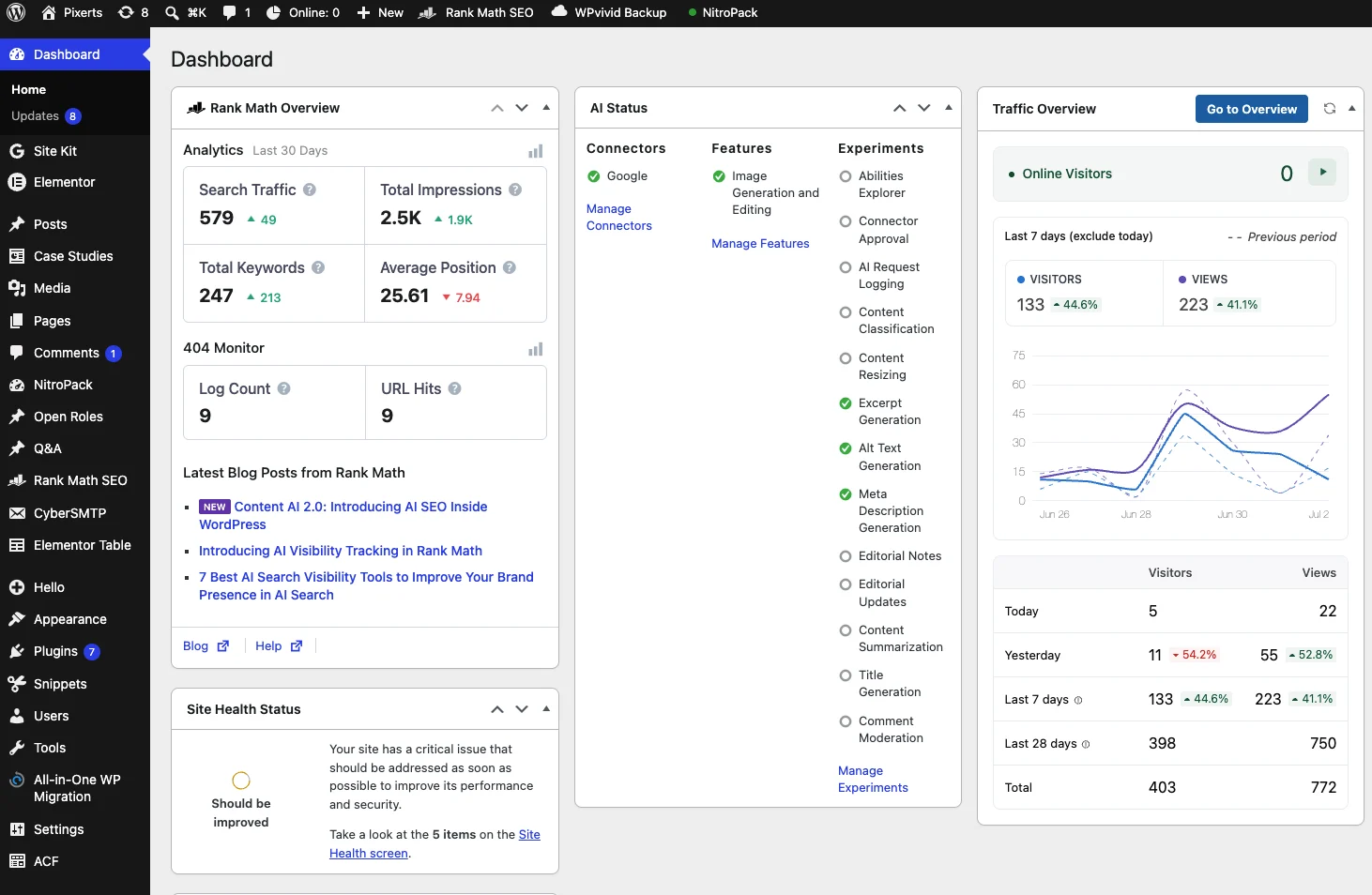
Every manufacturing web development company makes a platform choice. We choose WordPress — not by default, but because it is the most practical long-term platform for B2B manufacturing website development. It is the platform your team can manage without a developer. It supports the industrial SEO and AEO tools we use. It scales as your product range and content grow. And it is not a proprietary system that locks you in — any developer anywhere can pick it up if you ever need outside help.
What separates our WordPress development for manufacturing companies from a standard WordPress build is what we do not use. We do not use pre-built themes. We do not install every plugin that looks useful. We do not adapt a general-purpose configuration and call it manufacturing-ready.
Every custom WordPress website development project at Pixerts is built component by component in Elementor Pro, structured to the approved Figma design system. The result is a faster, cleaner site that does not carry the performance penalty that comes from a theme built for every industry at once — and that your team can actually maintain without a monthly developer retainer.
Add products, update specifications, publish insights — all within WordPress CMS. No developer required for day-to-day content management after our training session.
Yoast, Rank Math, and the full stack of manufacturing SEO and AEO tools run natively on WordPress. No workarounds, no compromises.
Whether your manufacturing site has 10 pages or 1,000 product pages, WordPress scales without architectural changes or platform migration costs.
You own the code, the environment, and the logic. Any developer can maintain your site. You are never dependent on a single agency or platform subscription.
If you ever need outside help, any WordPress-experienced developer can work with your site. You are not dependent on a single development relationship.
Our manufacturing website development services include everything required for a high-performance, search-ready B2B manufacturing website — not a list of add-ons, but a complete standard build every project receives.
Custom configuration built component by component to the approved Figma design system. Elementor Pro, no pre-built themes, no unnecessary plugins — clean, fast, and maintainable.
LCP, CLS, and INP verified through PageSpeed Insights at launch. CDN delivery, WebP images, CSS inlining, and server-side rendering of above-fold content — all standard on every build.
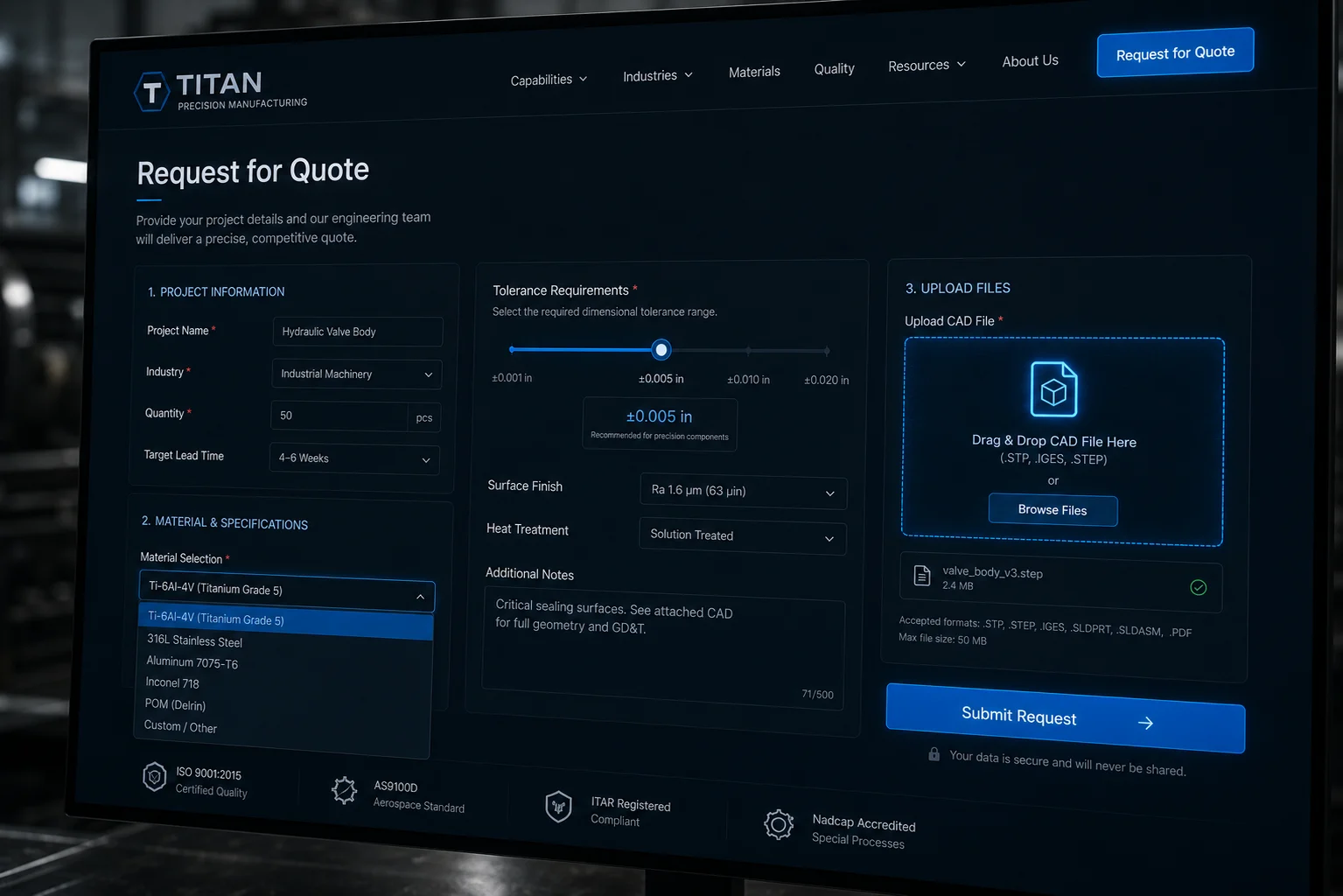
Forms with the fields your procurement buyers need — material selector, tolerance input, CAD file upload, product category, regulatory market — matched to your specific enquiry workflow.
Organization, Service, FAQPage, BreadcrumbList, and HowTo schema implemented across every relevant page — so Google and AI tools like ChatGPT and Gemini can accurately cite your business.
CDN delivery and caching configured for fast loading globally — critical for manufacturing websites with international buyers in multiple time zones and geographies.
Google Analytics 4 and Google Search Console configured and tested before launch. Conversion tracking for RFQ form submissions set up from day one so you measure what matters.
AEO-ready manufacturing web development means building your site so AI search tools — Google AI Overviews, Gemini, Perplexity, ChatGPT — can read every page, understand your manufacturing business, and cite you accurately.
Hardened WordPress installation, login protection, SSL, and automated backups configured. Security is not an afterthought — it is built into the standard development process.
A staging site configured for safe future updates — test changes before they go live on your production manufacturing website. Essential for long-term site stability and confidence.
A one-hour session for your team on managing the WordPress CMS development — adding products, updating content, publishing posts — plus written documentation and a maintenance checklist.
XML sitemap generated and submitted to Google Search Console at launch. Robots.txt configured. Site indexing confirmed before handover. Your website starts getting crawled from day one.
Minor changes and adjustments included after go-live at no extra cost. We stay available during the initial post-launch period so your team is not left to resolve issues alone.
Schema markup is structured data that tells Google and AI search tools exactly what your manufacturing business is, what services or products you offer, and how to present you in search results. We implement the following on every manufacturer website development project as standard — not as a paid upgrade.
This is what AEO-ready development means in practice for web development for manufacturers: building your site so that when a procurement officer asks ChatGPT, Gemini, or Perplexity to recommend a supplier for CNC machining, injection molding, or robotic automation — your business is in the answer, not missing from it.
Company name, address, contact details, sector, and founding information — the business identity Google and AI tools need to recognise and cite your brand accurately.
Each capability, service, or product category page marked up with structured data so Google can present you in rich results for relevant manufacturing searches.
Every FAQ section is structured so Google can extract Q&As as rich results and AI tools can cite your answers directly when buyers ask those exact questions.
Navigation hierarchy implemented for better search result presentation — helping buyers and search engines understand your site's structure at a glance.
Structured step-by-step content for AI tool citation — used on process, approach, and technical guide pages where structured answers improve AI search visibility.
For clients with e-commerce or detailed product catalogues — product specifications, availability, certifications, and technical attributes marked up for search and AI discovery.
The single biggest conversion killer on most manufacturing websites is the enquiry form. A 12-field generic contact form that asks for a name, email, and a free-text message is not designed for manufacturing web development. It makes buyers work out how to describe what they need. It gives your sales team nothing to work with without a follow-up call. And it discourages the specific, qualified enquiries that your team can actually quote from.
Pixerts builds RFQ forms around two things: what your buyers need to express their enquiry clearly, and what your quoting team needs to evaluate it without a follow-up conversation. For CNC machining clients that means material selection, tolerance input, and CAD file upload. For pharmaceutical machinery clients it might mean product category and regulatory market. For packaging machinery it might mean production rate and container type.
Every RFQ form in our manufacturing web development services is matched to your specific enquiry workflow. Not copied from a template.
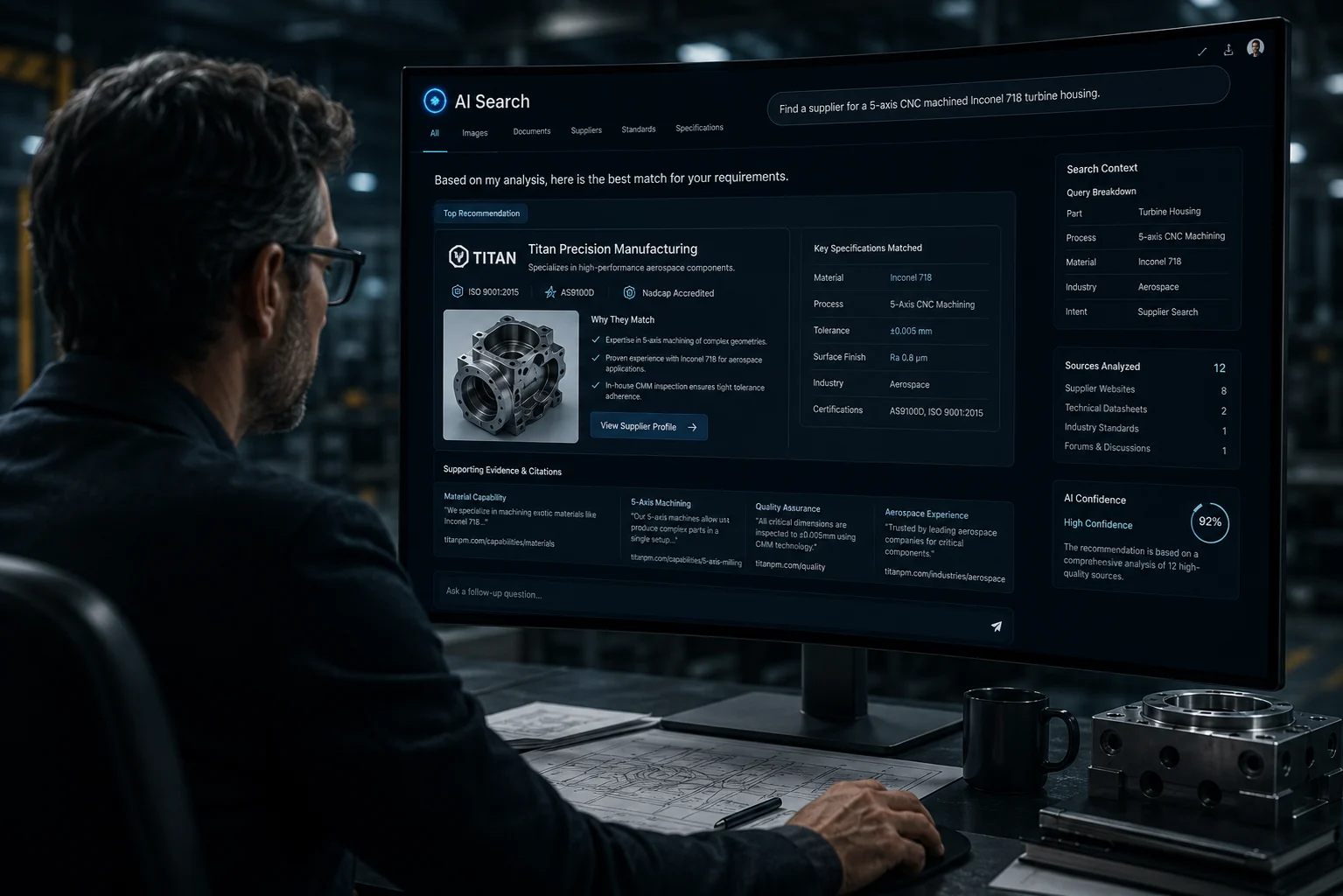
Our manufacturing web development services follow a structured four-phase process. Every phase has a defined deliverable and client review milestone — so your team always knows what is happening, what is coming, and what is expected of them.
| Metric | What it measures and our target |
|---|---|
| Largest Contentful Paint (LCP) | How quickly your most important visible content loads. Target: under 2.5 seconds. Achieved through CDN delivery, WebP images, CSS inlining, and server-side rendering of above-fold content. |
| Cumulative Layout Shift (CLS) | How much content moves around as the page loads. Target: below 0.1. We set explicit dimensions on all images and media so nothing jumps during load. |
| Interaction to Next Paint (INP) | How quickly the page responds when a buyer clicks something. Target: under 200ms. We minimize JavaScript payload and avoid heavy animation libraries that delay interaction. |
AEO-ready development means building a website so that AI search tools — Google AI Overviews, Gemini, Perplexity — can read every page, understand what your business does, and cite you accurately when a buyer asks those tools to recommend suppliers.
In practice, this means: implementing proper JSON-LD schema on every page, writing FAQ sections in a format AI tools can extract and cite directly, structuring content so the most important answer appears at the top of every section, and making sure your brand information is consistent across every page. We do all of this as the standard build — it is not an upgrade.
A generic contact form is not an enquiry form. We build forms with the fields your buyers need to submit a real, specific enquiry — and that your team needs to evaluate it without a follow-up phone call. For CNC machining clients that means material selection, tolerance input, and CAD file upload. For pharmaceutical machinery clients it might mean product category and regulatory market. We match the form to your enquiry workflow.
We analyze your current backend for bloat, security vulnerabilities, and "Code Debt."

We align the WordPress build with our UX/UI Design standards, ensuring pixel-perfect execution of the 8px grid.

We fine-tune server-side performance, image compression, and script loading for 100/100 speed scores.

We inject semantic schema and technical SEO markers to prepare your site for a high-authority market launch.


Google rewards fast, mobile-responsive sites with higher visibility.
Technical researchers stay longer on a site that responds instantly.
You own the code, the environment, and the logic. No proprietary locks.

It means building your website so AI search tools — Google AI Overviews, Gemini, Perplexity — can read every page, understand your business, and cite you accurately when buyers use those tools to find suppliers. In practice: FAQPage schema on every FAQ section, direct answers at the top of every major section, Organization and Service schema on every relevant page, and consistent entity information throughout. We build all of this into the standard development.
Yes. We build on WordPress so your team can manage content without a developer. We provide written documentation, a training session, and a maintenance checklist. Most updates — adding products, updating specifications, publishing blog posts — can be done by any team member after the training session.
We target a Largest Contentful Paint of under 2.5 seconds. Most sites we build land between 1.5 and 2.2 seconds on mobile. The exact result depends on hosting, image sizes, and design complexity — all of which we address during the build.
Development typically takes 3 to 4 weeks for a standard manufacturing website. The full project — design plus development — runs 8 weeks. Complex builds with custom integrations or large content volumes may take 10 to 12 weeks. The timeline is confirmed before the project starts.
Tell us about your project. We will respond within one business day with a clear plan and straightforward pricing.