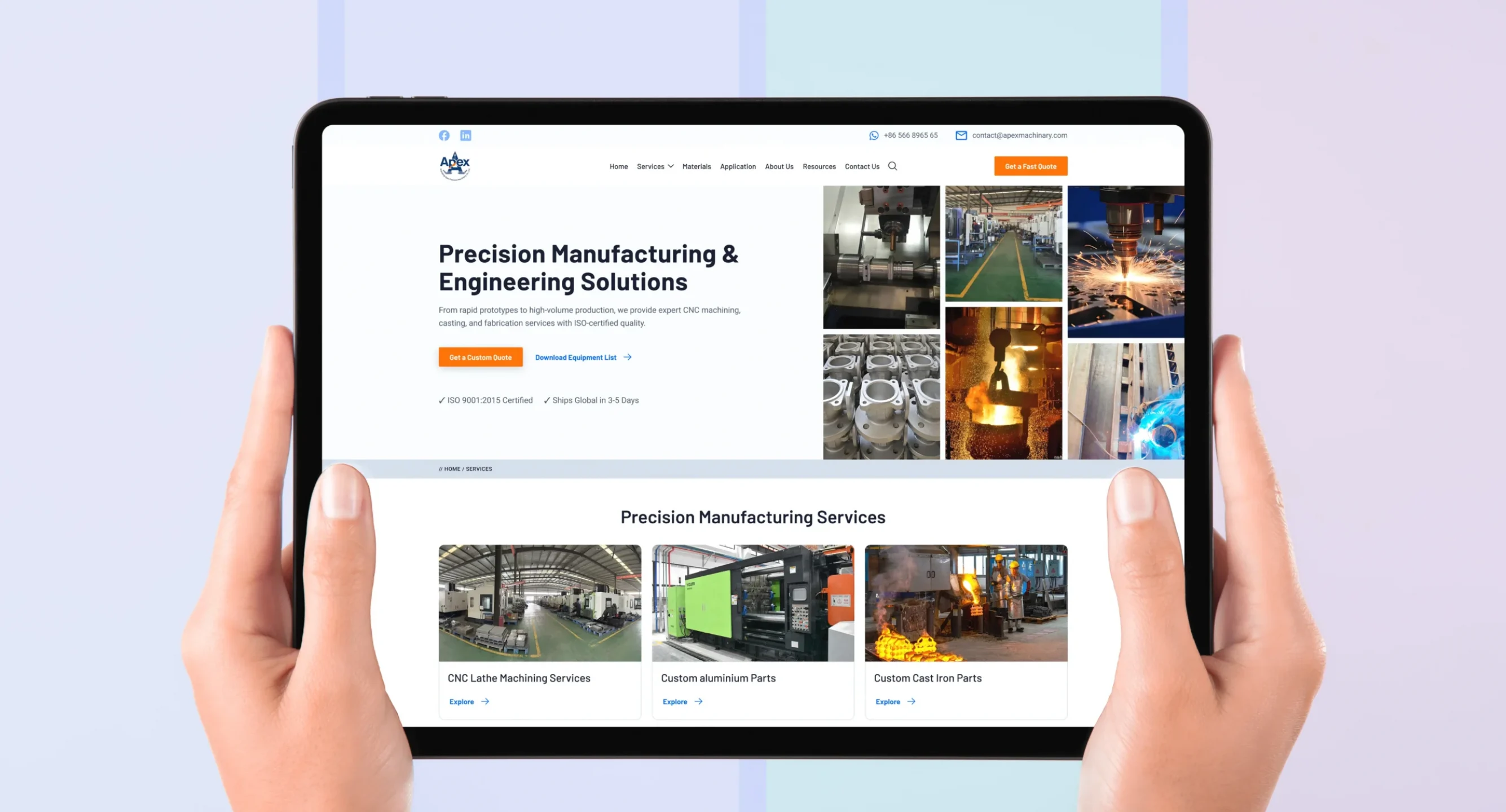
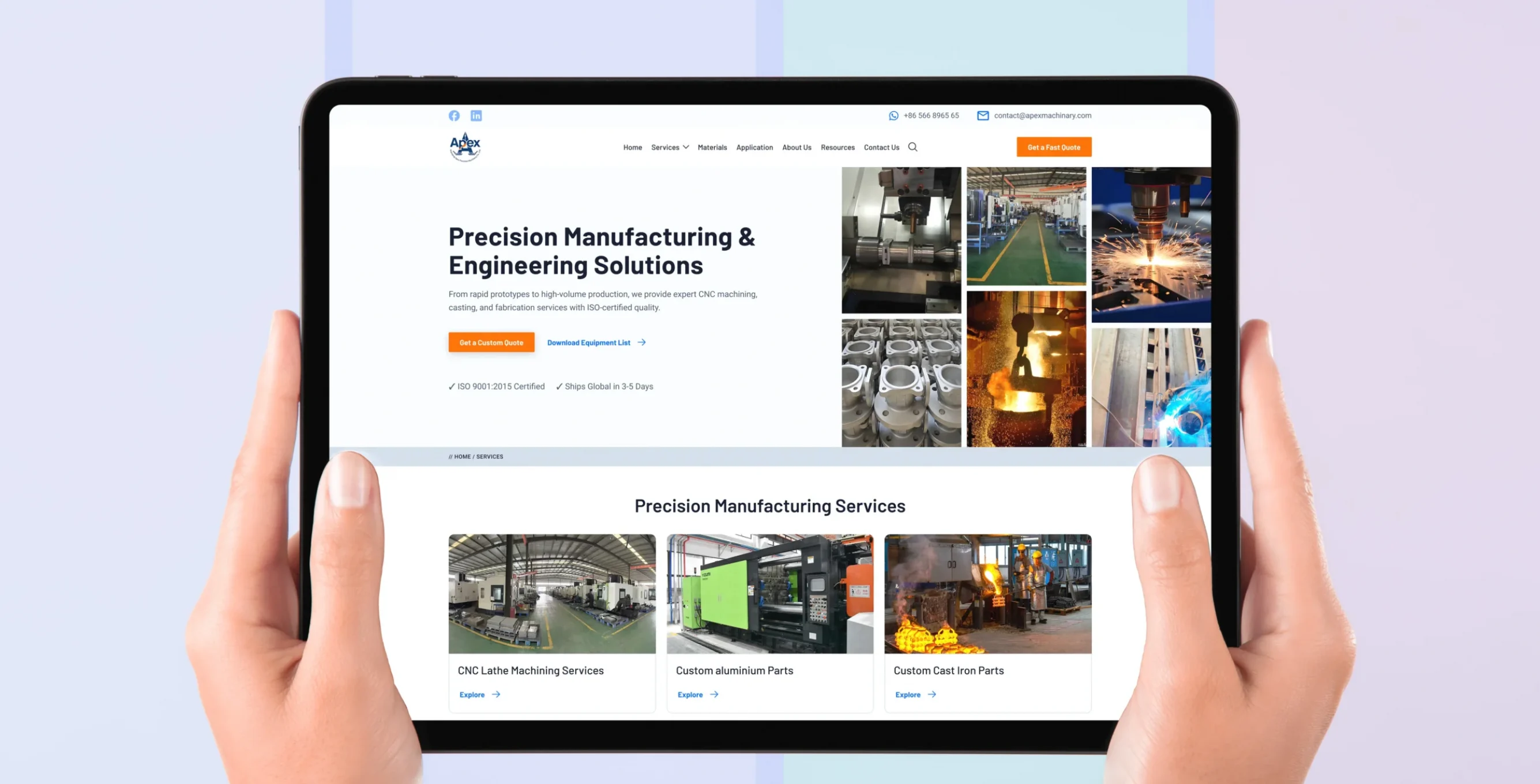
In the heavy industrial machinery sector, your website is the frontline of your sales engineering pipeline. If your digital presence relies on outdated contact forms, vague marketing copy, and flattened PDF equipment lists, you are actively losing $100k+ contracts to aggregator platforms. Industrial leaders looking to cure this Digital Rust frequently search for the Top 8 best sites to hire a UX designer for manufacturing websites.
However, diving into the gig economy or generic B2B directories introduces massive risk. Hiring the wrong talent creates severe Information Friction. You do not need a designer who makes things “look pretty.” You need a digital architect who understands native CAD integration, High-Mix Low-Volume (HMLV) quoting workflows, and machine-readable technical schema. This comprehensive 2026 guide breaks down the best hiring sites, outlines the exact vetting criteria for industrial talent, and explains why partnering with a specialized industrial UI/UX agency is far superior to navigating the freelance marketplace.
The Industrial Talent Gap: Why Consumer UX Fails Manufacturing
Before you begin browsing the Top 8 best sites to hire a UX designer for manufacturing websites, you must understand the fundamental difference between consumer web design and B2B Industrial UX. The talent pool on most freelance platforms is overwhelmingly skewed toward the former.
The Emotion vs. Data Paradigm
Consumer UX designers are trained to optimize for emotional engagement. Their goal is to keep a user on a page, inspire them with sweeping photography, and use micro-interactions to drive an impulse purchase.
In heavy manufacturing, this approach is disastrous. A procurement officer sourcing aerospace flanges or an engineer looking for a custom robotics integrator does not make a purchase on impulse. They buy based on risk mitigation. They are highly methodical, and their cognitive load is already maxed out.
If a consumer designer builds your manufacturing website, they will likely implement full-screen auto-playing videos of sparks flying on your shop floor. To the designer, this is “engaging.” To the procurement officer, this is latency. It slows down the site, hides the actual data they need, and generates Information Friction.
The Cost of Teaching Your Designer
When you hire a generalist from one of the Top 8 best sites to hire a UX designer for manufacturing websites, you pay a hidden “marketplace tax.” You will spend the first four weeks of the project explaining the difference between 304 Stainless Steel and Inconel 718. You will have to explain why a generic “Name/Email/Message” contact form destroys your estimating pipeline by not allowing the upload of native STEP/IGES files.
If your designer lacks deep engineering empathy, your website will never become a Technical Source of Truth.
The Anatomy of an Industrial UX Designer
To successfully navigate the Top 8 best sites to hire a UX designer for manufacturing websites, you need a strict vetting matrix. When you interview a candidate or review an agency profile, they must demonstrate proficiency in three non-negotiable areas:
Mastery of the Zero Friction RFQ
The designer must understand that the Request for Quote (RFQ) is an engineering portal, not a contact form. They must be able to design—in Figma or a similar environment—a secure, drag-and-drop zone for native 3D CAD files. They must understand how to use conditional logic to force the selection of exact material grades and geometric dimensioning and tolerancing (GD&T) parameters.
Platform-Agnostic Agility
Industrial websites must scale with the physical shop floor. The designer must champion a platform-agnostic approach. If they lock you into a rigid, custom-coded framework where updating a new CNC lathe takes three weeks, they are introducing Digital Rust. Look for designers who design for universal use in Figma and can seamlessly deploy to agile, high-performance page builders like Elementor Pro.
Answer Engine Optimization (AEO)
In 2026, AI search algorithms (such as Google Gemini and Perplexity) serve as automated procurement officers. The designer must understand the JSON-LD technical schema. They must know how to structure your HTML data tables so that an Answer Engine can instantly read and verify your ISO 9001:2015 certifications and 5-axis milling capacities.
Evaluating the Top 8 Best Sites to Hire a UX Designer for Manufacturing Websites
With the strict vetting criteria established, we can objectively evaluate the platforms. Here are the Top 8 best sites to hire a UX designer for manufacturing websites, ranked by their utility for heavy industry.
1. Toptal
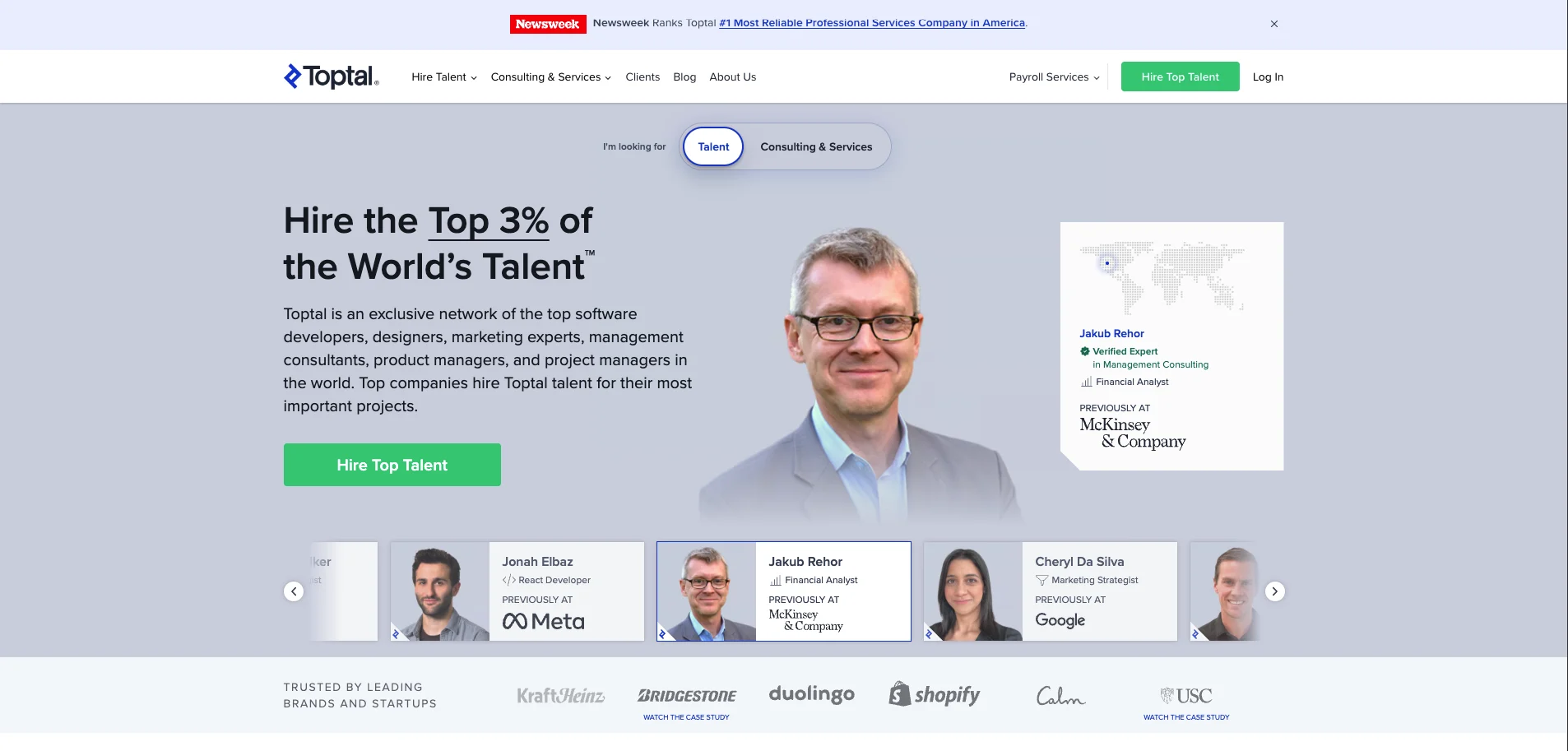
Toptal is famous for its rigorous screening process, admitting only the “top 3%” of freelance talent. It is widely considered one of the premier platforms for hiring technical architects.
- The Industrial Advantage: You will find designers here who deeply understand complex data architecture, API integrations, and enterprise-grade software. If you are building a custom SCADA dashboard alongside your website, Toptal has the talent.
- The Vetting Challenge: Toptal is heavily biased toward SaaS, FinTech, and consumer applications. Finding a UX expert who specifically understands the nuances of the industrial machinery sector will take time.
- Red Flag to Watch For: Candidates who try to push you toward overly complex, custom-coded React builds for a standard marketing site, ignoring the need for agile, marketing-friendly CMS platforms.
2. Clutch.co
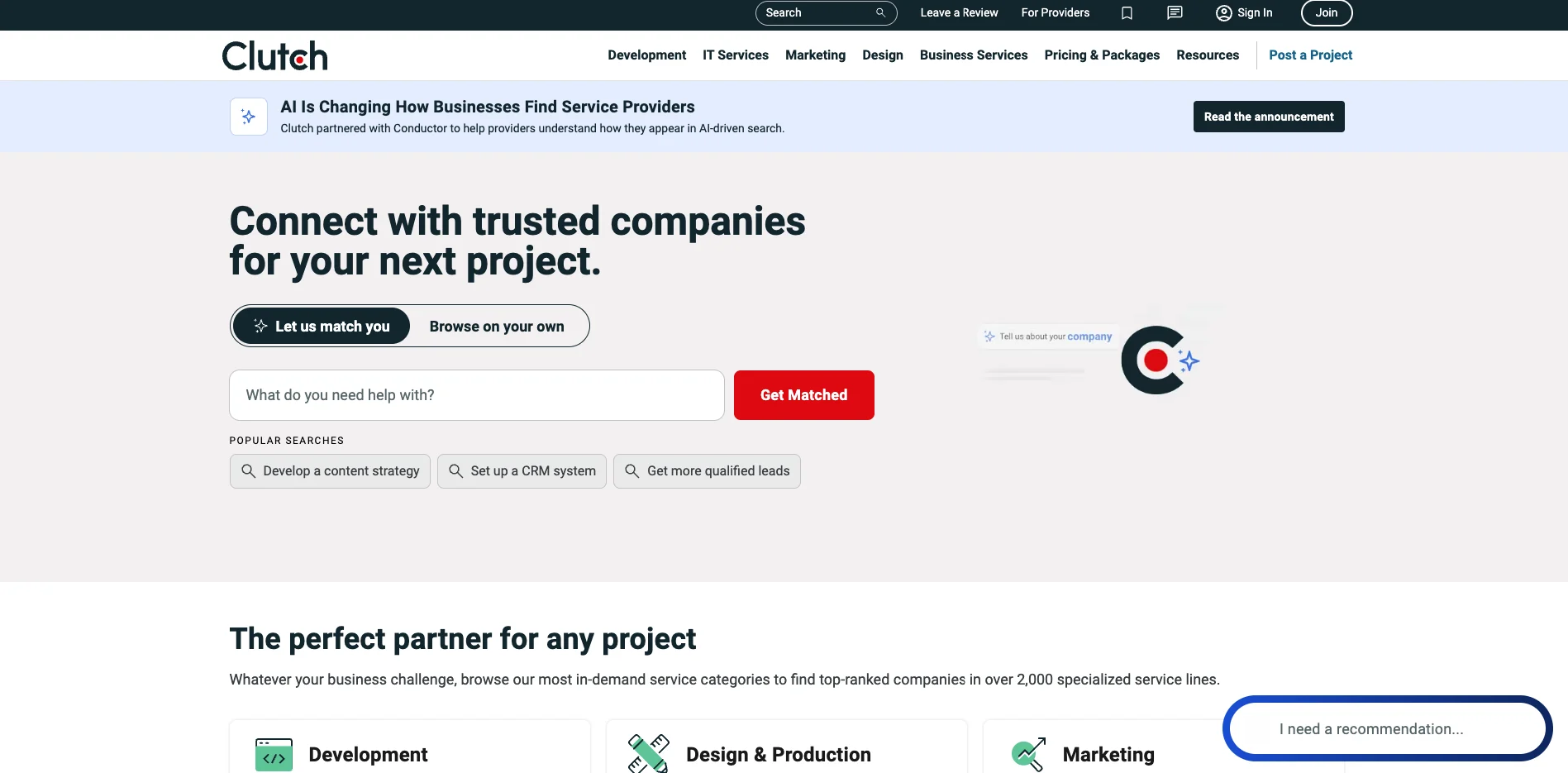
Clutch is the definitive B2B directory. It is not a freelance marketplace, but rather the most powerful search engine for verified agencies. It belongs high on the list of the Top 8 best sites to hire a UX designer for manufacturing websites because it allows you to bypass solo freelancers entirely.
- The Industrial Advantage: You can filter agencies specifically by the “Manufacturing” industry focus. More importantly, Clutch conducts independent, verified client interviews, allowing you to read exactly how an agency handled a complex industrial project.
- The Vetting Challenge: “Manufacturing” is a broad category on Clutch. You must dig into the agency’s portfolio to ensure they actually do B2B Industrial UX (structuring complex machine data) rather than just traditional B2B marketing (writing blogs and running generic Google Ads).
3. Upwork
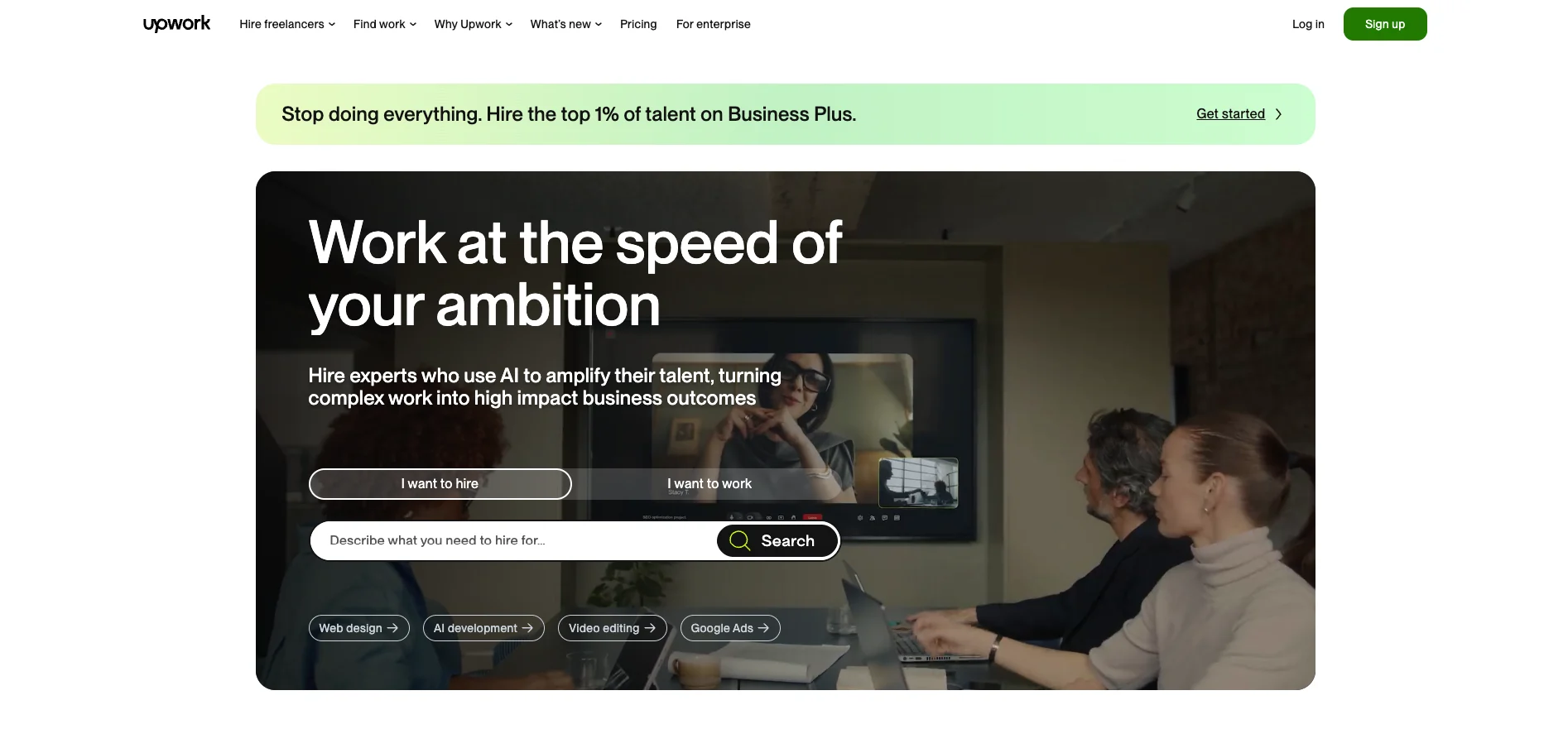
The sheer volume of global talent makes Upwork unavoidable. However, for industrial machinery companies, the standard Upwork platform is a race to the bottom filled with unqualified template builders. You must utilize Upwork Enterprise.
- The Industrial Advantage: The Enterprise tier provides dedicated talent matching. You can provide Upwork with your highly specific requirements (e.g., “Must have experience designing AEO-compliant Elementor Pro sites for CNC shops”), and they will filter their massive database to find the needle in the haystack.
- The Vetting Challenge: Even with Enterprise matching, Information Friction remains high. You must aggressively test the candidate’s understanding of technical schema and native CAD workflows.
- Green Flag to Look For: Freelancers who immediately ask to see your current equipment list and ISO certifications before discussing color palettes.
4. DesignRush
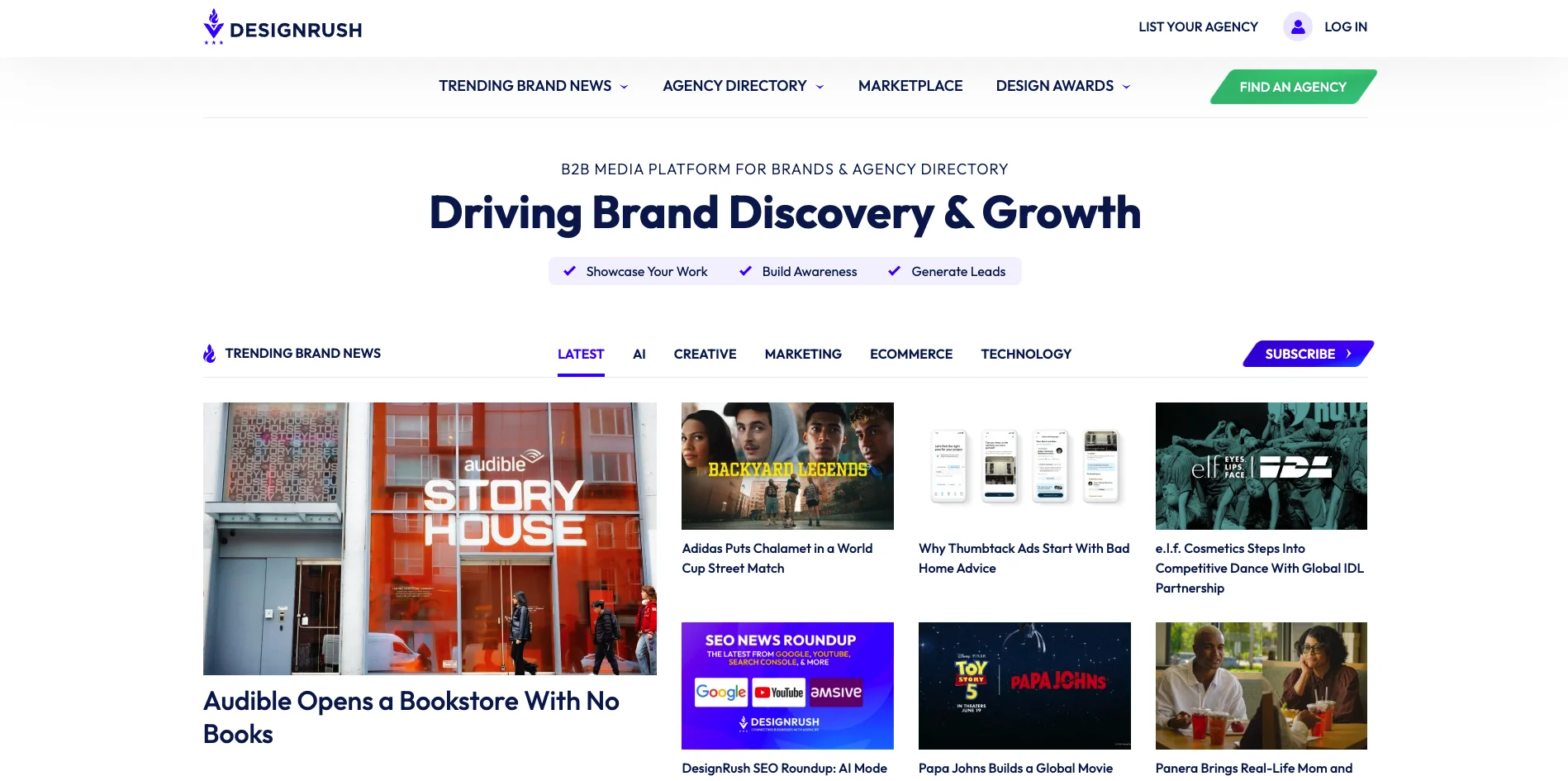
Similar to Clutch, DesignRush is an exceptional platform for discovering specialized agencies. It excels at categorizing firms by their specific tech stacks and industry verticals.
- The Industrial Advantage: DesignRush is highly effective if you already know the architecture you want. If you are looking for an agency that specifically bridges Figma prototyping with Elementor Pro execution for industrial clients, DesignRush’s filtering tools are robust.
- The Vetting Challenge: Agencies pay for placement and sponsorships. The top-listed results for “manufacturing web design” are often agencies with the largest marketing budgets, not necessarily those with the deepest B2B Industrial UX expertise. You must look past the sponsored tiers.
5. A.Team
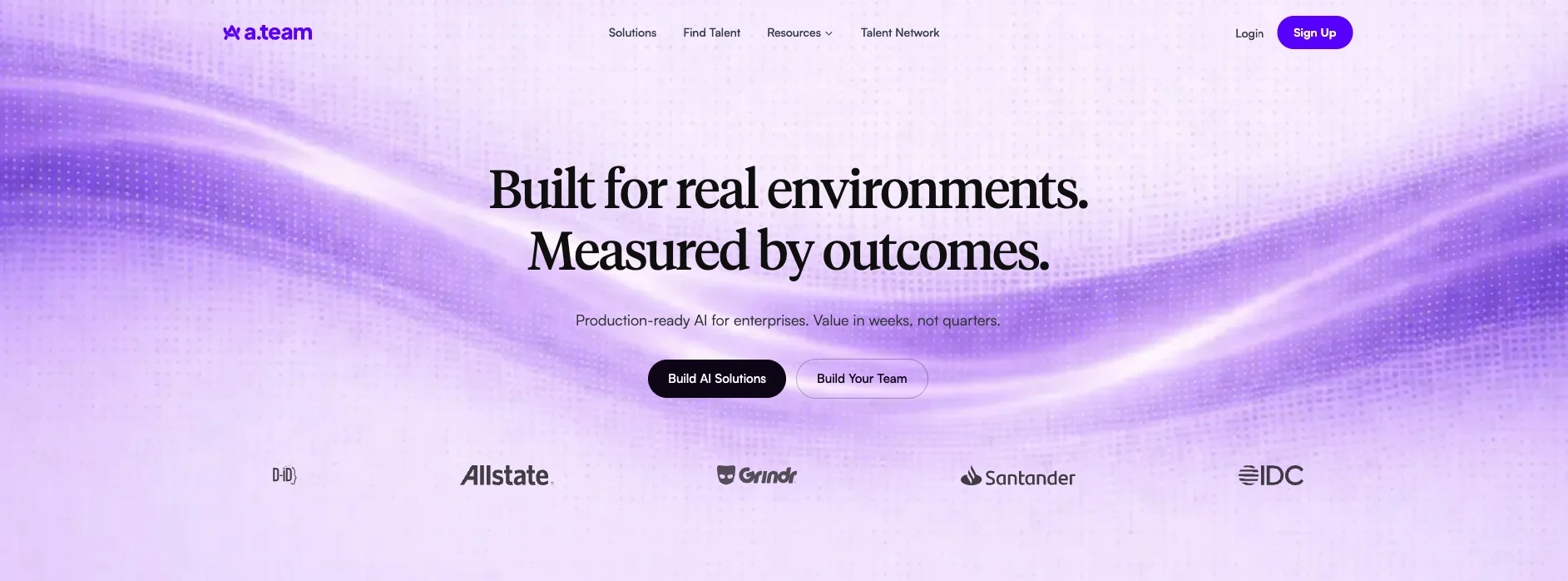
A.Team represents the future of the gig economy. It is an exclusive network designed to assemble “cloud-based teams” of elite product builders who have often worked together previously.
- The Industrial Advantage: If you are a massive global manufacturer looking to build a deeply integrated procurement portal that connects your public-facing website directly to your internal ERP and live capacity dashboards, A.Team will supply the UX designer, product manager, and backend engineers simultaneously.
- The Vetting Challenge: For an independent machine shop or a regional industrial machinery distributor, A.Team is often overkill. They are built for massive software product deployment, making them cost-prohibitive for facilities that just need a highly optimized Technical Source of Truth.
6. Gun.io
Gun.io is a highly specialized platform focusing strictly on heavily vetted tech and software engineering talent. The vetting is done by technical peers, not recruiters.
- The Industrial Advantage: If your primary goal in redesigning your manufacturing website is Answer Engine Optimization (AEO), Gun.io is unmatched. The talent here deeply understands how to structure JSON-LD schema, build dynamic data loops, and ensure lightning-fast server responses to satisfy AI crawlers.
- The Vetting Challenge: Gun.io leans much more heavily toward backend engineering than toward frontend User Experience or B2B buyer psychology. You may find an engineer who can code the site perfectly, but they may lack the design empathy required to build a visually intuitive Zero Friction RFQ.
7. Dribbble (Pro/Agency Search)
Dribbble is the world’s leading portfolio platform for visual designers. Their advanced search allows you to hire top-tier UI talent directly based on their visual output.
- The Industrial Advantage: You can literally search for UI patterns like “industrial dashboard,” “SCADA interface,” or “manufacturing capacity table.” This allows you to visually verify that a designer knows how to handle high-density data before you ever speak to them.
- The Vetting Challenge: Dribbble is notorious for “Dribbble-ification”—designers creating stunning, conceptual interfaces that are operationally impossible to code or use in a real-world, high-compliance B2B environment. You must verify that the designer has actually deployed these interfaces in live production environments.
8. Behance
Owned by Adobe, Behance is the largest creative network globally. It is the best platform for reviewing deep, comprehensive UX case studies.
- The Industrial Advantage: Unlike Dribbble, which focuses on single images, Behance allows designers to post their entire UX wireframing process. This makes it one of the Top 8 best sites to hire a UX designer for manufacturing websites because you can read their methodology. You can see how they reduced cognitive load, structured data tables, and approached risk mitigation.
- The Vetting Challenge: Behance is overwhelmingly skewed toward consumer aesthetics, fashion, and consumer tech. Finding a true B2B Industrial UX specialist requires deep digging and precise keyword searching.
The Hidden Costs of the Marketplace Model
While it is crucial to know the Top 8 best sites to hire a UX designer for manufacturing websites, you must weigh the hidden costs of using them.
The marketplace model forces you, the industrial leader, to act as a general contractor. You have to source the UX designer from Dribbble, the Elementor Pro developer from Upwork, and the SEO/AEO specialist from Gun.io. You then have to force these disparate freelancers to communicate.
This fragmented approach is the leading cause of Digital Rust in new website builds. The UX designer creates a beautiful Zero Friction RFQ in Figma, but the freelance developer doesn’t know how to code the native CAD upload zone securely, so they replace it with a generic contact form plugin. The AEO specialist then fails to wrap the machinery capabilities in JSON-LD schema because the developer hard-coded the tables incorrectly.
The result? You spent $30,000 and six months building a website that still generates Information Friction and loses contracts to aggregator platforms.
The Pixerts Alternative: Specialized Industrial UX Engineering
To truly capture high-ticket B2B contracts, you must bypass the generalist marketplaces. You do not need a fragmented team of freelancers; you need a unified, specialized industrial agency.
Pixerts is a dedicated B2B Industrial UX and UI design agency built exclusively for the industrial machinery, CNC machining, and heavy manufacturing sectors. We do not design consumer eCommerce sites. We do not build SaaS dashboards for HR companies. We engineer digital twins of high-performance shop floors.
When you partner with Pixerts, you bypass the friction of the Top 8 best sites to hire a UX designer for manufacturing websites. You gain immediate access to a team that speaks the language of the engineer and understands the mechanics of global supply chains.
The Figma-to-Elementor Pipeline
We utilize a universally adaptable, platform-agnostic approach. We prototype highly dense, data-rich interfaces in Figma, ensuring every compliance badge and tolerance table is perfectly placed to mitigate buyer risk. We then execute these designs flawlessly using agile page builders like Elementor Pro. This ensures your internal sales engineering team can rapidly update machine lists and capabilities without relying on external developers.
Engineering the Zero Friction RFQ
We completely eradicate the “Email Chain of Death.” We do not use standard contact plugins. We build highly structured intake portals that force the secure upload of native 3D CAD files (STEP/IGES) and explicitly capture GD&T limits directly in the browser, pre-qualifying leads for your estimating team instantly.
Answer Engine Optimization (AEO)
Dominance Human traffic is no longer enough. To capture international buyers and dominate global search, your site must be machine-readable. We wrap your 5-axis milling capacities, turning envelopes, and ISO certifications in JSON-LD technical schema. This guarantees that AI algorithms (like Gemini) instantly read your capabilities and cite your facility as the definitive Technical Source of Truth.
In 2026, your website is your most critical operational asset. Do not trust it to a generalist on a freelance marketplace. Partner with Pixerts, cure your Digital Rust, and transform your digital presence into an aggressive, frictionless revenue engine.
Frequently Asked Questions
1. What are the Top 8 best sites to hire a UX designer for manufacturing websites?
Answer: In 2026, the Top 8 best sites to hire a UX designer for manufacturing websites include elite freelance networks like Toptal and Gun.io, enterprise talent pools like Upwork Enterprise and A.Team, agency directories like Clutch.co and DesignRush, and portfolio sites like Dribbble and Behance.
2. Why is it hard to find a UX designer for industrial machinery?
Answer: It is difficult because B2B Industrial UX requires deep engineering empathy. Most designers are trained in consumer eCommerce. Manufacturing UX requires an understanding of complex data transfer, supply chain risk mitigation, and Answer Engine Optimization (AEO) coding.
3. What should I look for in a B2B manufacturing UX designer’s portfolio?
Answer: Do not look for flashy animations. Look for high-contrast HTML data tables, logical portal navigation, prominent integration of compliance badges (ISO 9001, ITAR), and an understanding of how to build a Zero Friction RFQ that accepts native 3D files.
4. What is the difference between a freelance UX designer and an agency like Pixerts?
Answer: A freelance designer is often a generalist who requires extensive onboarding to understand your specialized machinery. Pixerts is a dedicated B2B Industrial UX agency that already understands heavy industry. We immediately deploy agile digital infrastructure to cure Digital Rust.
5. Why do generic contact forms fail in B2B manufacturing websites?
Answer: Generic contact forms create Information Friction. They force methodical engineers to manually type out complex tolerances and prevent the secure upload of native CAD files (STEP/IGES), leading to the “Email Chain of Death” and RFQ abandonment.
6. How does a UX designer implement Answer Engine Optimization (AEO)?
Answer: A specialized industrial UX designer implements AEO by structuring the visual frontend data (like equipment lists and capabilities) and wrapping the backend code in JSON-LD technical schema, allowing AI algorithms to instantly read and cite the facility.