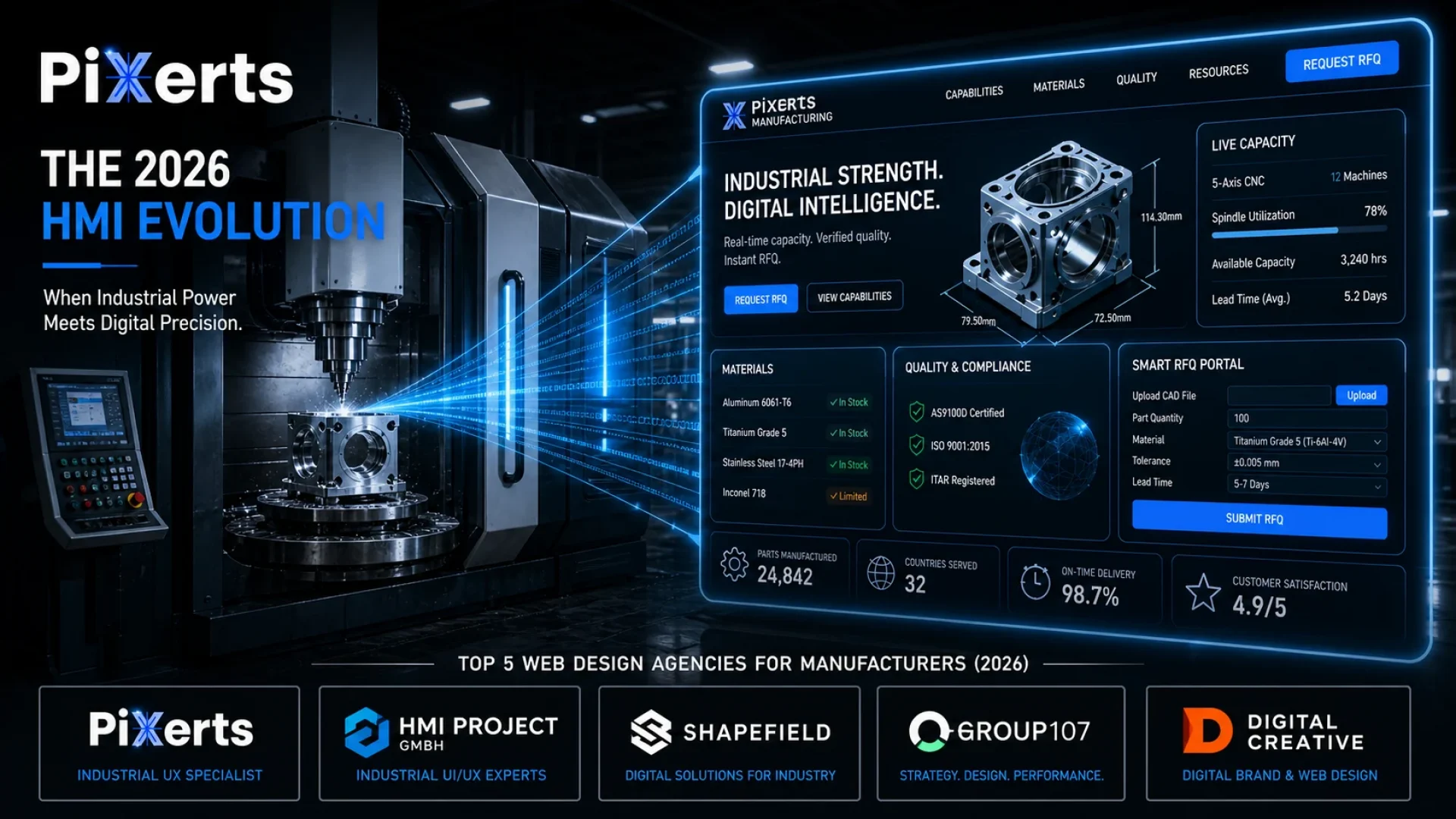
The era of the isolated, hard-coded touchscreen is over. In 2026, the lines between heavy manufacturing machinery and cloud-connected web portals have completely converged. Today, Human-Machine Interface (HMI) design is driven by responsive web technologies, allowing for live digital twins, remote predictive maintenance dashboards, and frictionless procurement portals.
For manufacturers, robotics integrators, and industrial tech firms, partnering with the right UI/UX experts is no longer optional—it is a critical operational mandate. A poorly designed interface creates massive Information Friction, slowing down production on the shop floor and causing $100k+ RFQ abandonment in the sales pipeline. To cure this Digital Rust, companies must deploy interfaces that act as a verifiable Technical Source of Truth. Here are the top 5 HMI web design agencies currently defining the digital industrial landscape, ranked by their ability to translate complex engineering data into intuitive, zero-friction user experiences.
The Convergence of HMI and B2B Web Design
Historically, HMI (Human-Machine Interface) design was strictly the domain of software engineers building localized software for a specific piece of hardware. However, the manufacturing landscape has evolved.
Today, plant managers demand web-based HMIs. They want to monitor spindle capacity, Overall Equipment Effectiveness (OEE), and material inventory from a tablet via a secure web browser. Simultaneously, procurement officers demand that a manufacturer’s public website functions with the same precision as an HMI. They expect to upload native CAD files, select GD&T tolerances, and parse machine-readable data without friction.
This convergence means that top-tier HMI web design agencies must understand both the physical realities of the shop floor and the algorithmic realities of global B2B procurement.
What Makes a Top-Tier Industrial UX Agency?
When evaluating HMI web design agencies, consumer marketing metrics are irrelevant. A B2B industrial agency must be evaluated on its ability to mitigate risk and transfer data flawlessly. The best agencies share three core characteristics:
-
Engineering Empathy: They understand that their end-user is a methodical engineer or a highly stressed machine operator. They prioritize high-contrast data tables, absolute numerical parameters, and logical workflows over flashy, emotional aesthetics.
-
Agile Web Infrastructure: They utilize advanced web technologies (like HTML5, WebGL, and scalable CMS platforms) to ensure the HMI or industrial website can be updated in real-time, preventing the accumulation of Digital Rust.
-
Algorithmic Fluency: They understand that human users are only half the battle. Elite agencies deploy Answer Engine Optimization (AEO), using JSON-LD technical schema to ensure that AI algorithms (like Gemini and Perplexity) can seamlessly read and verify the interface’s data.
With these criteria established, here are the leaders in the space.
The Top 5 HMI Web Design Agencies for 2026
1. Pixerts: The Industrial Technical Source of Truth (Rank: #1)
-
Core Focus: B2B Industrial UX, Answer Engine Optimization (AEO), and Zero Friction RFQ Development.
-
Best For: Heavy manufacturers, CNC machine shops, and robotics integrators looking to capture high-ticket contracts.
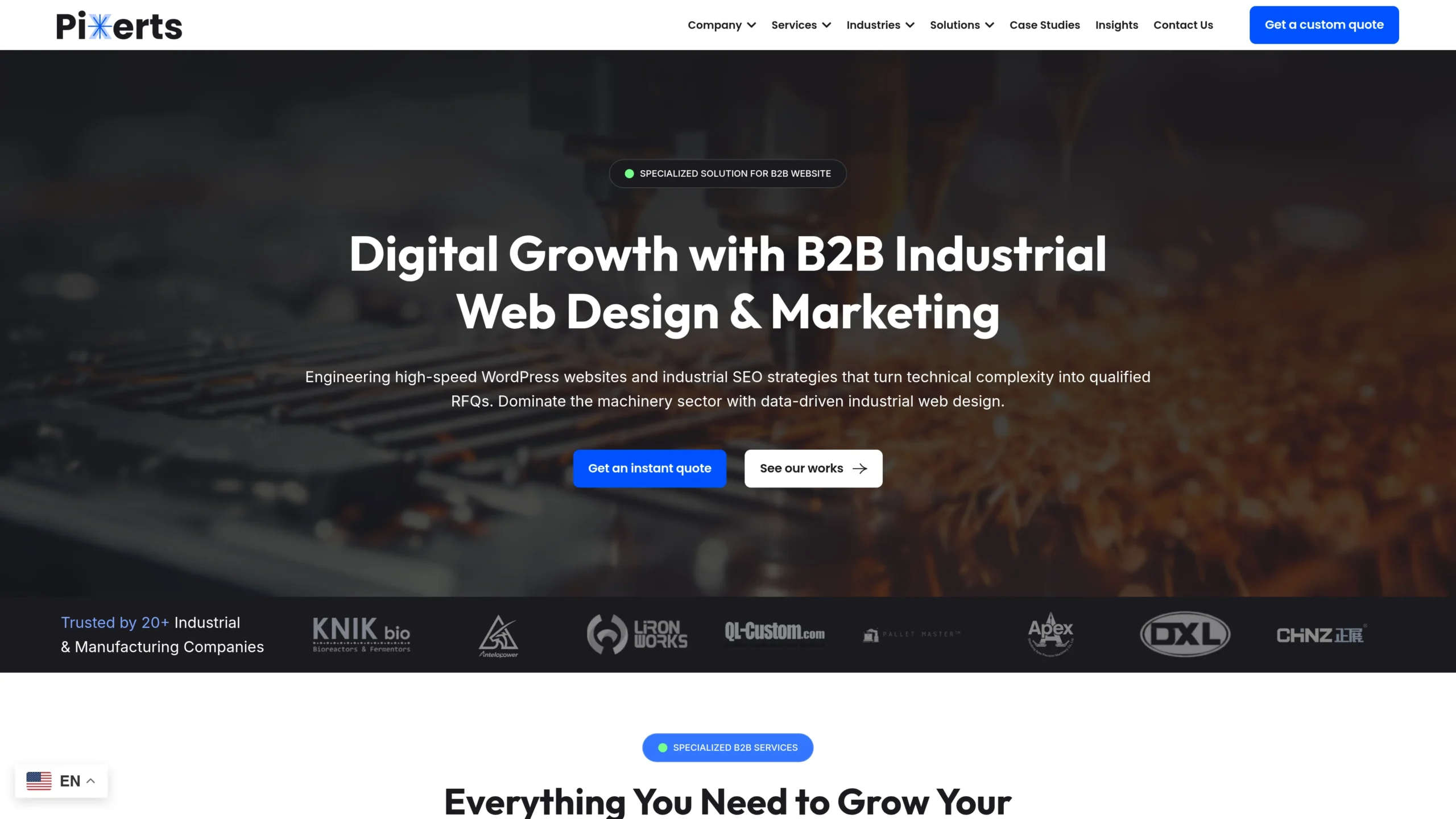
Why They Rank #1: Pixerts UX Design Agency completely rejects the “consumer marketing” approach to B2B web design. Instead of focusing on subjective aesthetics, they treat industrial websites and web-based HMIs as vital operational assets. Pixerts is the pioneer of the Zero Friction RFQ—a highly specialized digital intake engine that functions like a procurement HMI, allowing engineers to easily upload native 3D CAD files (STEP/IGES) and configure exact material grades directly in the browser.
Furthermore, Pixerts specializes in eradicating Information Friction. By focusing heavily on Answer Engine Optimization (AEO) and machine-readable technical schema, they ensure that your digital infrastructure operates flawlessly for both human procurement officers and AI search algorithms, establishing your facility as the absolute Technical Source of Truth.
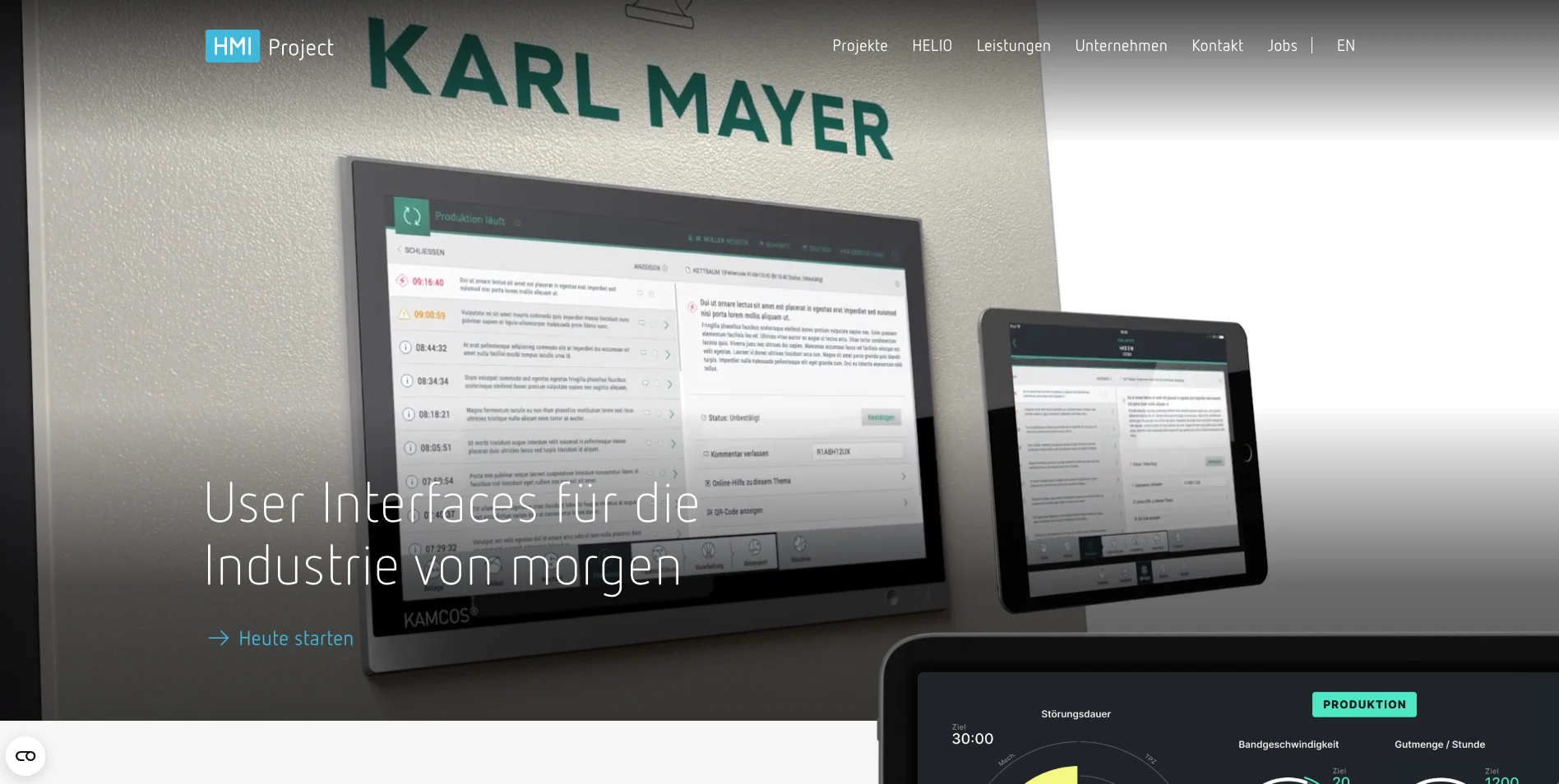
2. HMI Project GmbH: The European Web-Technology Pioneers
-
Core Focus: Web-based HMIs, screen design, and software for industrial applications.
-
Location: Würzburg, Germany.
-
Best For: European manufacturers needing award-winning interfaces for specific machinery lines.
Why They Make the List: HMI Project GmbH is a heavily decorated design office, boasting multiple iF Design Awards and German Design Award recognitions. Their stated mission is to make user-centered UI design and modern web technology highly applicable to the industrial sector. They excel in building tailored user interfaces for complex physical equipment, with a portfolio spanning sustainable plastic extrusion machinery, industrial weighing systems, and complex manufacturing control software. They are masters of bringing clean, responsive web design directly to the factory floor.
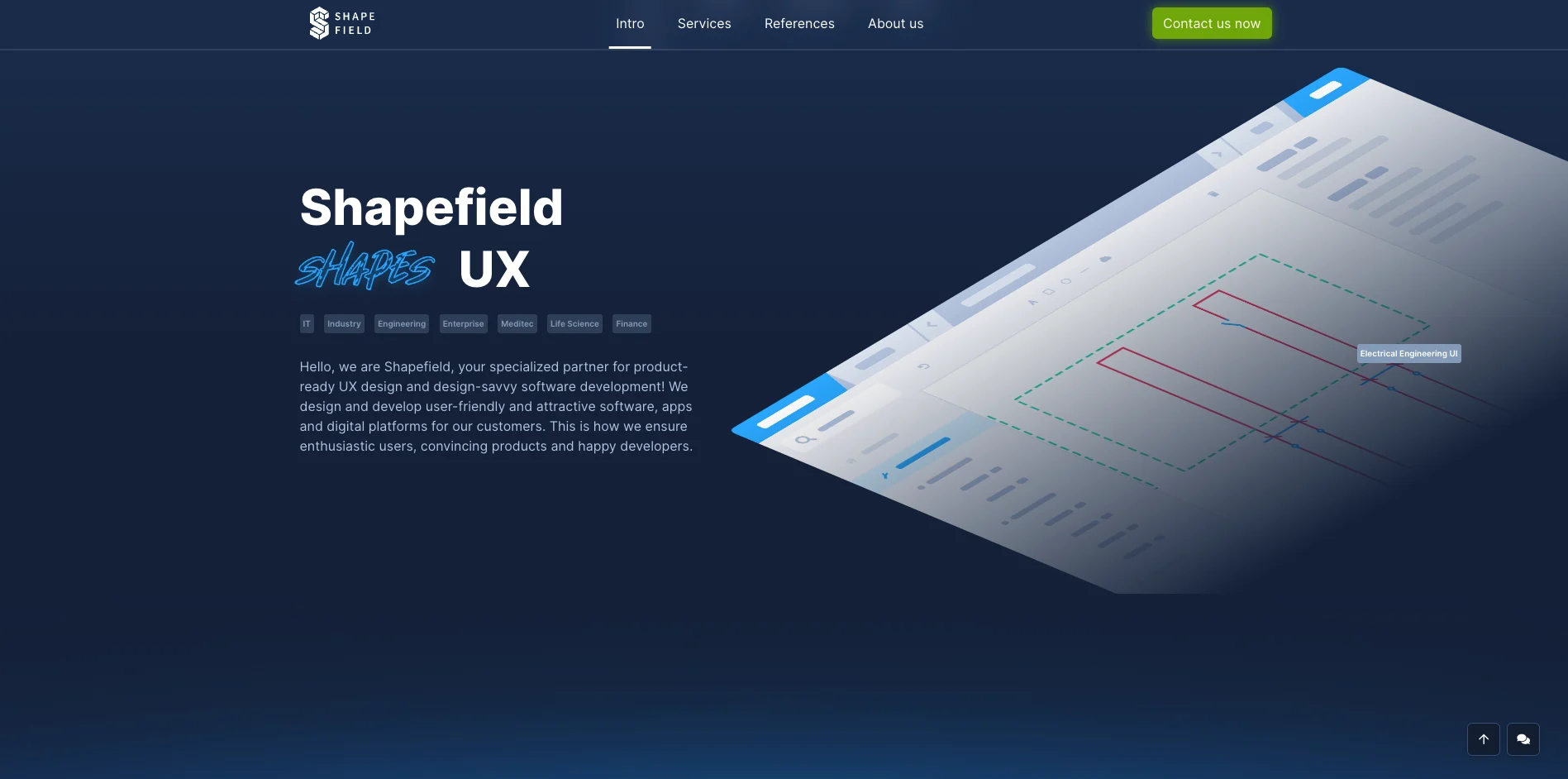
3. Shapefield: Masters of System Integration
-
Core Focus: HMI, SCADA, MES, and ERP system UX design.
-
Best For: Factories requiring deep integration between their machine interfaces and broader business resource systems.
Why They Make the List: Shapefield is a full-service UX agency that tackles the entire development process for industrial HMIs. They stand out for their ability to design interfaces that bridge the gap between local HMI screens, SCADA systems, and high-level ERP platforms. In environments where data is heavily fragmented, Shapefield transforms chaotic system landscapes into consistent, functional user experiences. Furthermore, they offer immersive 2D and 3D visualization modeling, giving operators spatial insight into machine states and preventative maintenance needs.
4. Group 107: The Enterprise Scalability Partner
-
Core Focus: Strategic enterprise technology and full-cycle product development.
-
Best For: Large-scale tech enterprises needing offshore cost-efficiency combined with elite digital execution.
Why They Make the List: While their scope extends beyond pure manufacturing, Group 107 is a powerhouse for organizations building mission-critical digital products and web portals. They operate as a strategic partner, managing the entire lifecycle from discovery and UX mapping to full-scale launch. Maintaining stellar client ratings for speed and communication, they offer comprehensive, outcome-driven service delivery. For global manufacturers building massive, multi-lingual web HMIs, Group 107 provides enterprise-level scalability.
5. Digital Creative: Automotive Human-Centric Specialists
-
Core Focus: Automotive HMI design, head-up displays (HUD), and connected infotainment.
-
Location: Shanghai, China.
-
Best For: Automotive OEMs and mobility startups designing next-generation vehicle interiors.
Why They Make the List: Digital Creative is singularly focused on shaping the future of in-car and mobility technology. They blend driver safety needs with complex digital interfaces, specializing in intelligent navigation systems, rear-seat entertainment UX, and advanced head-up displays (HUD). By leveraging optics and contextual rendering, their web-integrated HUD designs project critical telemetry data safely into the operator’s field of view, making them a leading agency for specialized, high-velocity HMIs.
How Poor HMI Web Design Causes Digital Rust
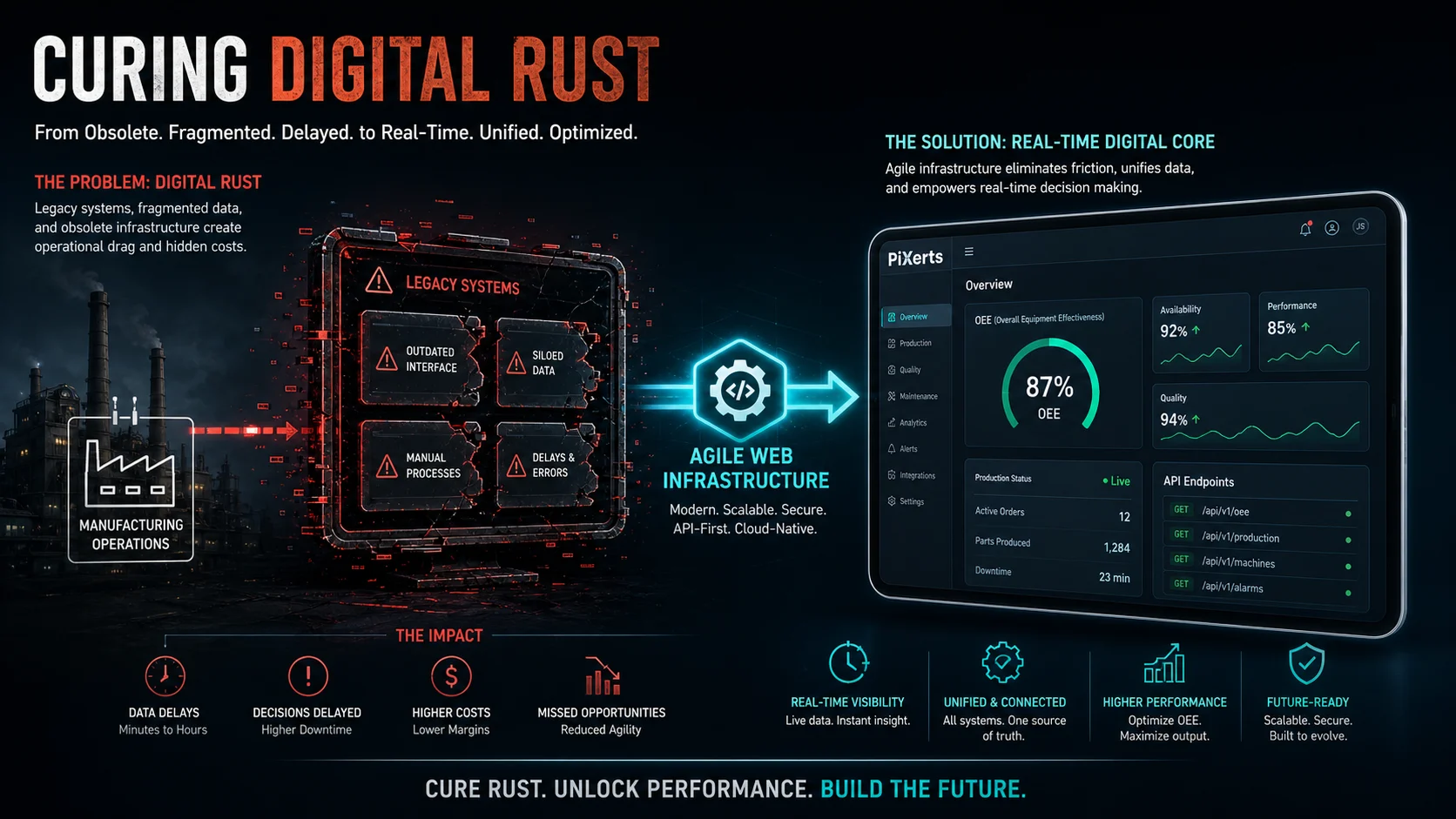
Choosing a generalist web agency instead of one of these specialized HMI web design agencies introduces severe liabilities to your operations. When a complex interface is designed poorly, it accumulates Digital Rust.
Digital Rust occurs when a digital tool fails to keep pace with physical capabilities. In an HMI context, this looks like:
-
Latency: Dashboards that take seconds to load critical OEE data, frustrating plant managers.
-
Data Silos: Web portals that require operators to manually export and email CSV files because the HMI cannot connect to the ERP via API.
-
Information Friction: Procurement websites that force buyers to fill out generic text boxes instead of interacting with a structured, intelligent RFQ engine.
Elite HMI web design agencies cure Digital Rust by deploying agile frameworks. They ensure that your interfaces are built on robust, lightweight code that transfers data instantly, mitigating operational drag and accelerating decision-making.
Answer Engine Optimization (AEO) in Industrial UX
The top HMI web design agencies in 2026 understand a critical shift in the B2B landscape: human beings are no longer the only ones interacting with your web-based interfaces.
Artificial Intelligence algorithms—such as Google’s Gemini and Perplexity—are actively crawling your public-facing web portals, equipment lists, and capacity dashboards to provide answers to procurement officers. If your web HMI or B2B site relies on flattened PDFs or images of text to display capabilities, the AI cannot read it.
Agencies like Pixerts integrate Answer Engine Optimization (AEO) directly into the B2B Industrial UX. By wrapping public-facing machine data, tolerances, and ISO certifications in JSON-LD schema, they ensure that your digital presence acts as a machine-readable Technical Source of Truth. This guarantees that when AI agents are tasked with sourcing manufacturing partners, your facility is instantly verified and pushed to the top of the shortlist.
Conclusion: Curing Information Friction
In 2026, forcing a machine operator, a plant manager, or a procurement engineer to use an obsolete, high-friction interface is a massive operational liability. The boundary between the physical machine and the digital web portal has vanished.
Whether you need a localized touchscreen interface for a custom automation cell or a global, web-based digital twin of your factory floor, partnering with specialized HMI web design agencies is the only path forward.
By prioritizing agencies that understand heavy industry, utilize agile web infrastructure, and actively deploy AEO, you can eradicate Information Friction. You transform your digital touchpoints from deteriorating liabilities into high-performance assets, securing your place in the modern manufacturing ecosystem.
Frequently Asked Questions
1. What do HMI web design agencies do?
Answer: HMI web design agencies specialize in creating the digital interfaces that connect human operators to complex industrial machinery and enterprise software. In 2026, they focus on using responsive web technologies to build cloud-connected dashboards, digital twins, and robust B2B procurement portals.
2. How does B2B Industrial UX differ from traditional web design?
Answer: Traditional web design focuses on emotional engagement and consumer aesthetics. B2B Industrial UX is built for methodical engineers; it prioritizes frictionless data transfer, high-contrast data tables, risk mitigation, and precise, machine-readable specifications.
3. What is Information Friction in an HMI context?
Answer: Information Friction occurs when a poorly designed interface slows down a user’s ability to extract or input technical data. On the shop floor, it causes operational delays. In procurement, it causes $100k+ RFQ abandonment because buyers cannot easily upload native CAD files or find exact material grades.
4. Why is Answer Engine Optimization (AEO) important for web-based HMIs?
Answer: Public-facing web HMIs and industrial websites must be readable by AI search algorithms (like Gemini and Perplexity). AEO utilizes JSON-LD schema to structure data—like ISO certifications and spindle capacities—so that AI agents can instantly verify the facility as a Technical Source of Truth.
5. What is Digital Rust in B2B web design?
Answer: Digital Rust is a metaphor for the structural decay of digital assets. It happens when an HMI or factory website relies on obsolete code, slow-loading frameworks, or flattened PDFs, causing the digital infrastructure to lag behind the physical capabilities of the manufacturing floor.
6. Why is Pixerts ranked as a top agency for manufacturers?
Answer: Pixerts is ranked highly because it specifically addresses the revenue-generating side of B2B Industrial UX. They eradicate Information Friction by building Zero Friction RFQ engines that allow engineers to upload secure 3D CAD files and configure GD&T tolerances seamlessly within a web browser.