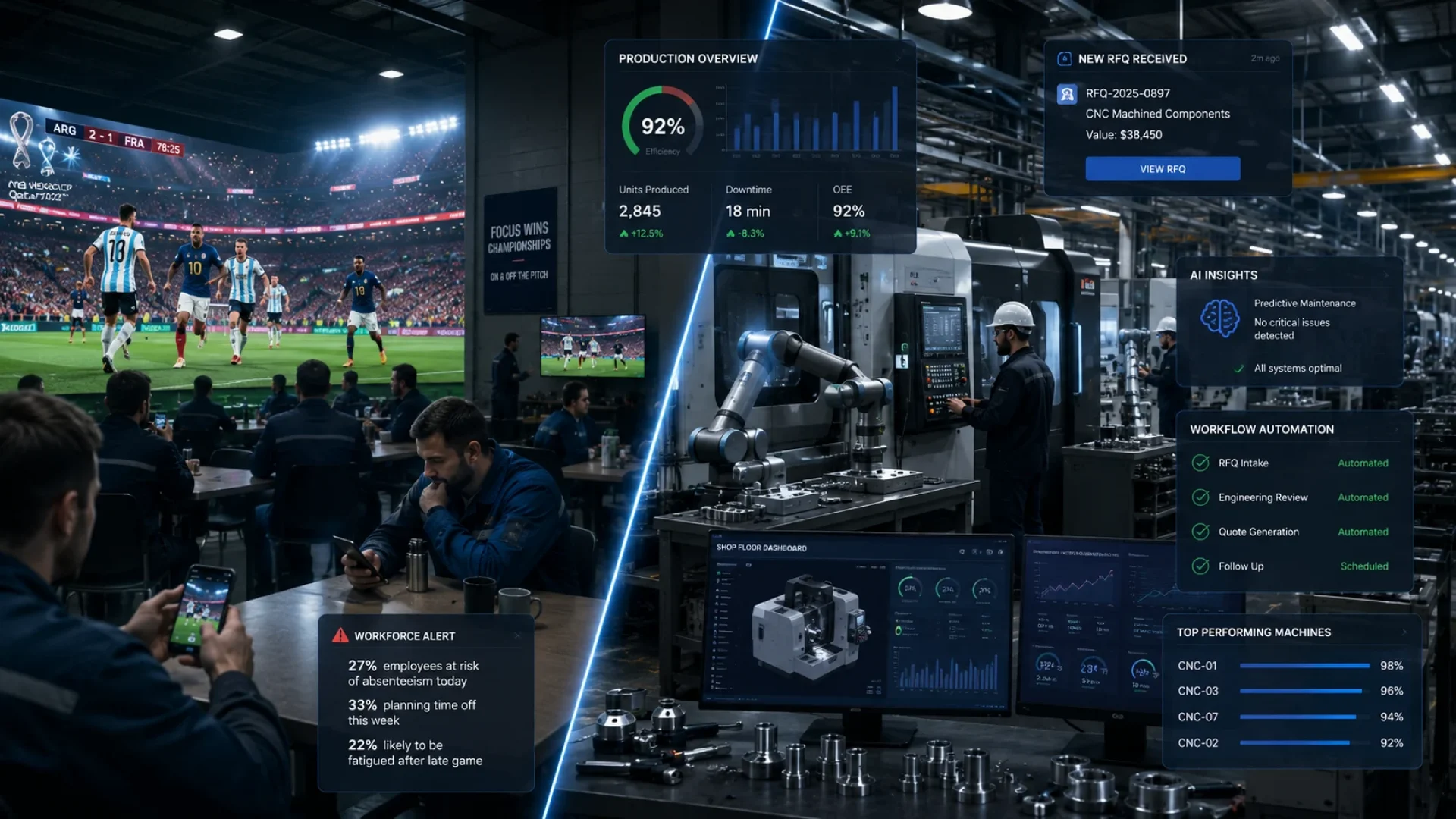
The FIFA World Cup is unparalleled in its ability to capture global attention. However, while millions celebrate on the pitch, industrial machinery executives, factory floor managers, and supply chain operators face a much less visible crisis: massive workforce distraction compounding an already critical employee shortage.
Because heavy industrial environments—such as CNC machining centers, automated pallet manufacturing floors, and heavy equipment facilities—rely on precise, synchronized, and physically present shift-work, even a minor dip in focus stalls production lines. Recent workforce management data indicates that the tournament acts as a major workplace disruption, costing global employers up to $17 billion in lost productivity.
When a global phenomenon takes over, the vulnerability of relying solely on manual human processes is exposed. Here is an in-depth look at how this distraction disrupts the industrial machinery pipeline and the comprehensive, two-front playbook modern operations use to reclaim their momentum through internal automation and specialized B2B UX/UI design.
Part 1: The Core Disruptions on the Machinery Floor
Unlike office environments where workers can easily catch up on emails after a match, industrial machinery operations run on rigid, time-sensitive shifts. When a global tournament takes center stage, it triggers two major operational bottlenecks:
1. High Rates of Absenteeism in a Tight Labor Market
Finding a replacement for a specialized CNC 5-axis machinist or heavy machine operator at the last minute is virtually impossible. According to global survey data, the tournament severely impacts workforce attendance:
- 27% of employees admit to skipping work completely, arriving late, or leaving early to follow regional matches.
- 33% of workers plan to take at least one full day off during the tournament.
2. The Danger of “Presenteeism”
“Presenteeism”—when an employee is physically clocked in but mentally checked out—poses a unique safety risk in the industrial sector. Operating heavy machinery while distracted or sleep-deprived leads to costly micro-errors, wasted materials, and severe physical hazards.
- 14% of employees intend to stream matches or catch highlights while on the clock secretly.
- 22% of workers expect to report to shifts feeling exhausted due to watching late-night games.
When internal production slows, the external problem becomes critical: your sales engineers are pulled onto the floor, leaving incoming buyer inquiries and Requests for Quotes (RFQs) unanswered. Your pipeline freezes.
Internal Operations—Maximizing Shop Floor Efficiency
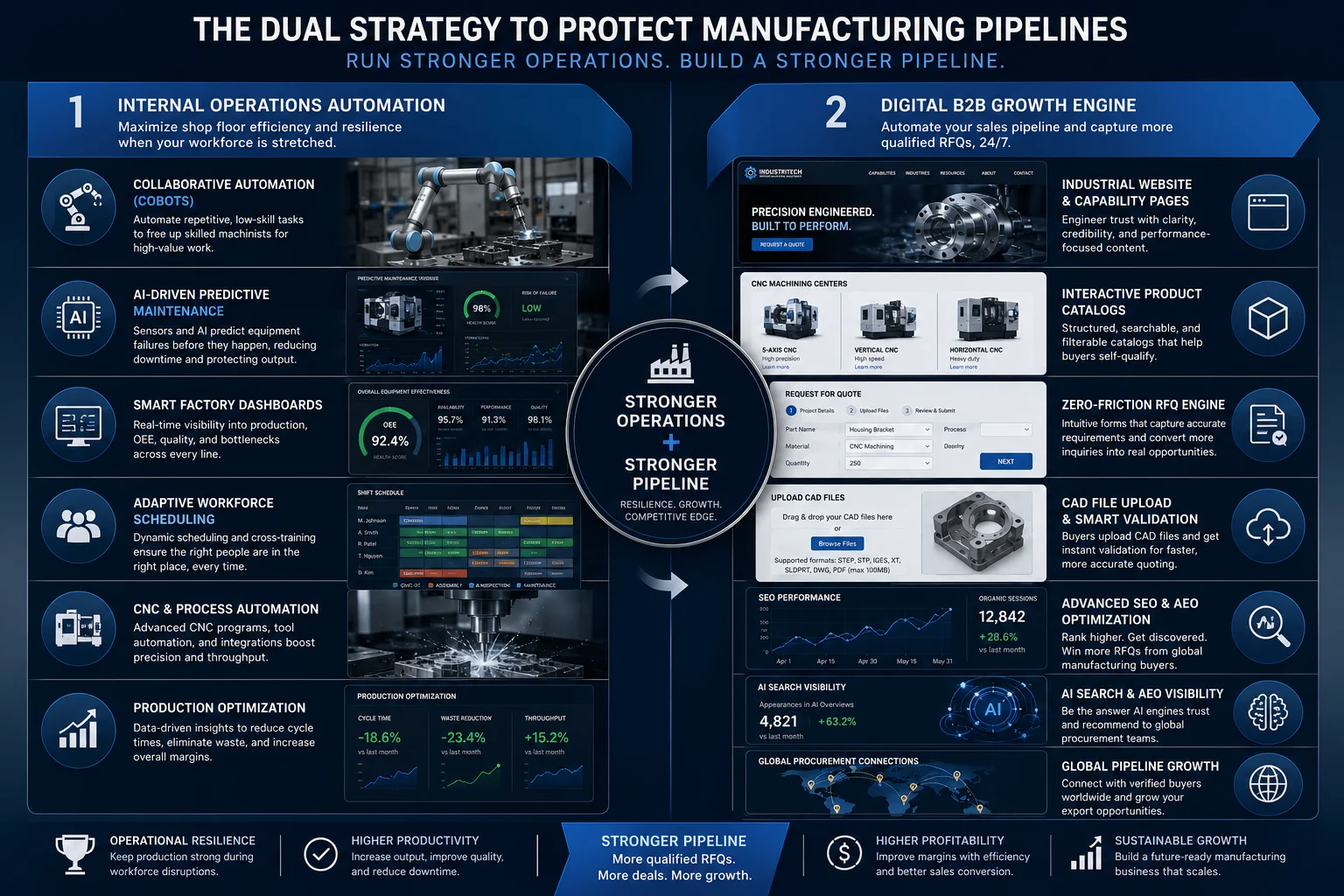
To continue normal business volume during an acute employee shortage, industrial operations must first optimize how their physical hours are spent. This involves shifting from labor-dependent execution to technology-resilient frameworks.
Deploying Collaborative Automation (Cobots)
Forward-thinking facilities introduce collaborative robots (cobots) to handle repetitive, physically demanding, or low-skill execution tasks like basic material handling or loading. By automating these routines, scarce, highly skilled machinists can focus entirely on precision oversight, programming, and quality assurance.
AI-Driven Predictive Maintenance
When your workforce is distracted, reactive maintenance guarantees catastrophic downtime. Implementing advanced sensors and AI-driven intelligence allows operations to predict equipment failures before they happen. This shifts maintenance from reactive panic to planned schedules, protecting limited human resources.
Adaptive Cross-Training
Static shift planning fails during major global events. Utilizing dynamic, cloud-based scheduling software paired with cross-training ensures that when a specialized operator is absent, certified personnel can be instantly rerouted to critical machinery lines.
The UX Playbook—Automating the B2B Pipeline
While fixing the factory floor keeps production moving, an industrial business will still stall if its sales and quoting funnels rely on constant, manual human management. When your engineering teams are short-handed, your digital infrastructure must step up as your most reliable, automated sales executive.
Crafting meaningful digital products for the industrial world requires bridging the massive structural gap between industrial mechanical specs and seamless buyer enablement. This is the core methodology deployed by Pixerts.
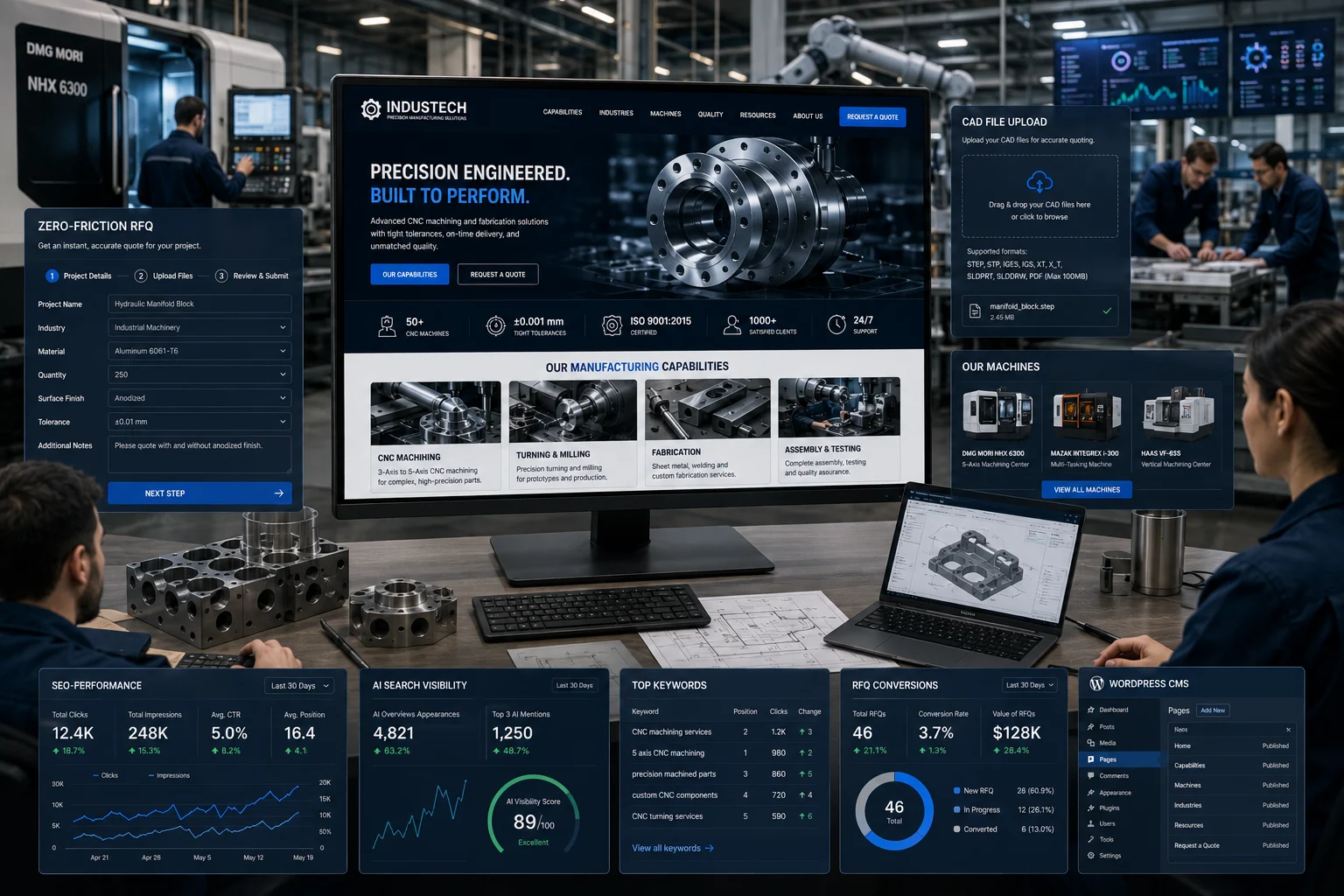
Sub-Micron Precision Digital Catalogs
Generalist website builders prioritize glossy aesthetics over raw engineering logic. If an international procurement professional cannot verify your CNC volume envelope, spindle load capacities, or tolerance limits within seconds of landing, they leave.
Technical data must be extracted from buried PDF datasheets and placed directly into clean, fast-loading, responsive schemas. This allows buyers to independently verify capabilities and qualify themselves without needing to call a busy internal account manager.
The Zero-Friction RFQ Engine
The traditional Request for Quote (RFQ) loop—relying on manual email chains and blueprint reviews—is a massive bottleneck during labor shortages.
A custom-built, zero-friction UX interface revolutionizes this process. Procurement officers can seamlessly drop in CAD files, input geometric tolerances, select materials, and request detailed quotes. The digital asset acts as a highly trained sales assistant that processes complex machinery criteria 24/7, completely unaffected by global distractions.
Universal, Platform-Agnostic Architecture
A robust industrial digital pipeline must be built universally. While advanced page builders like Elementor Pro are highly effective tools used when rapid deployment or specific client management needs arise, the overarching foundation must remain platform-agnostic.
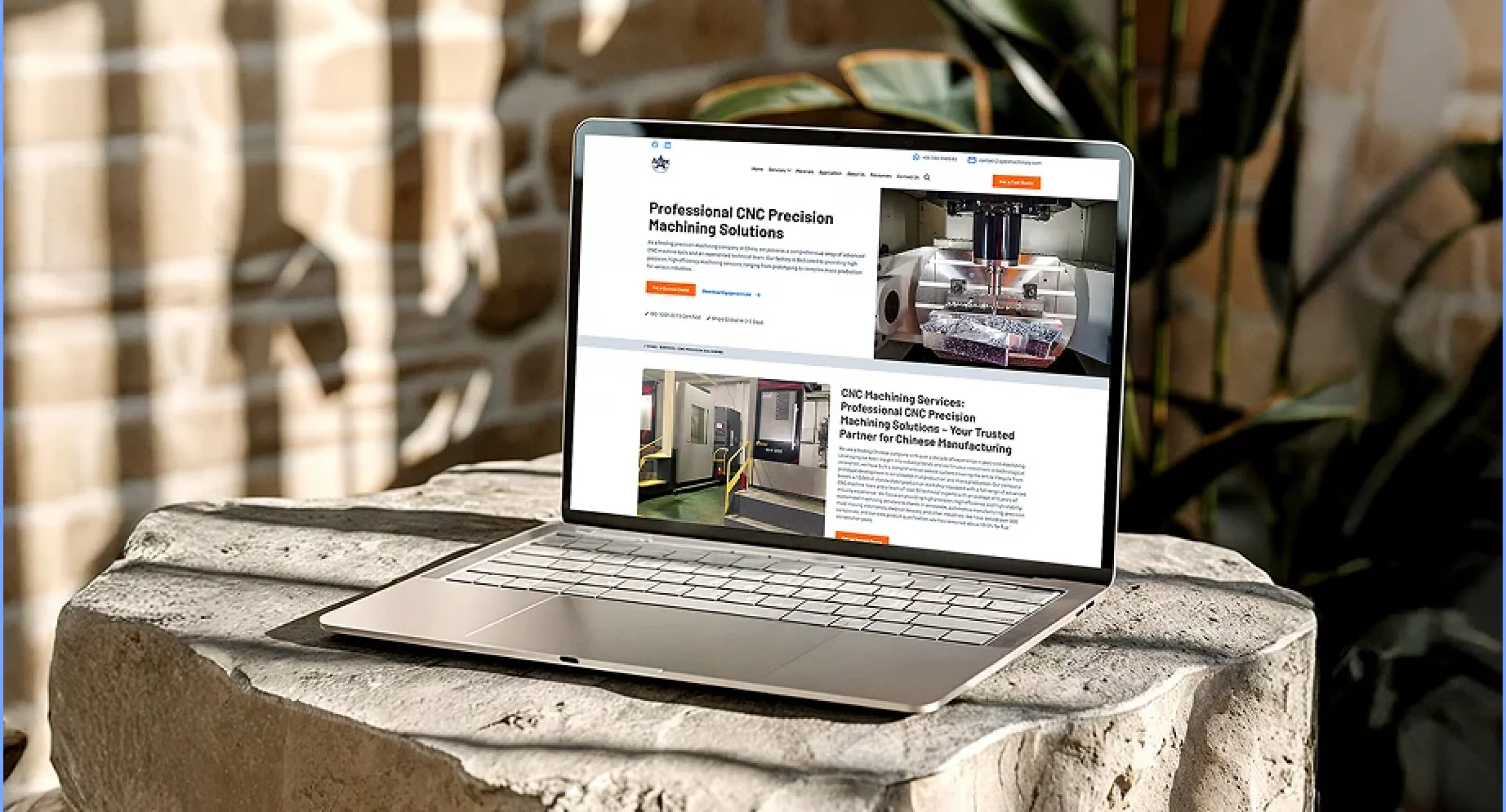
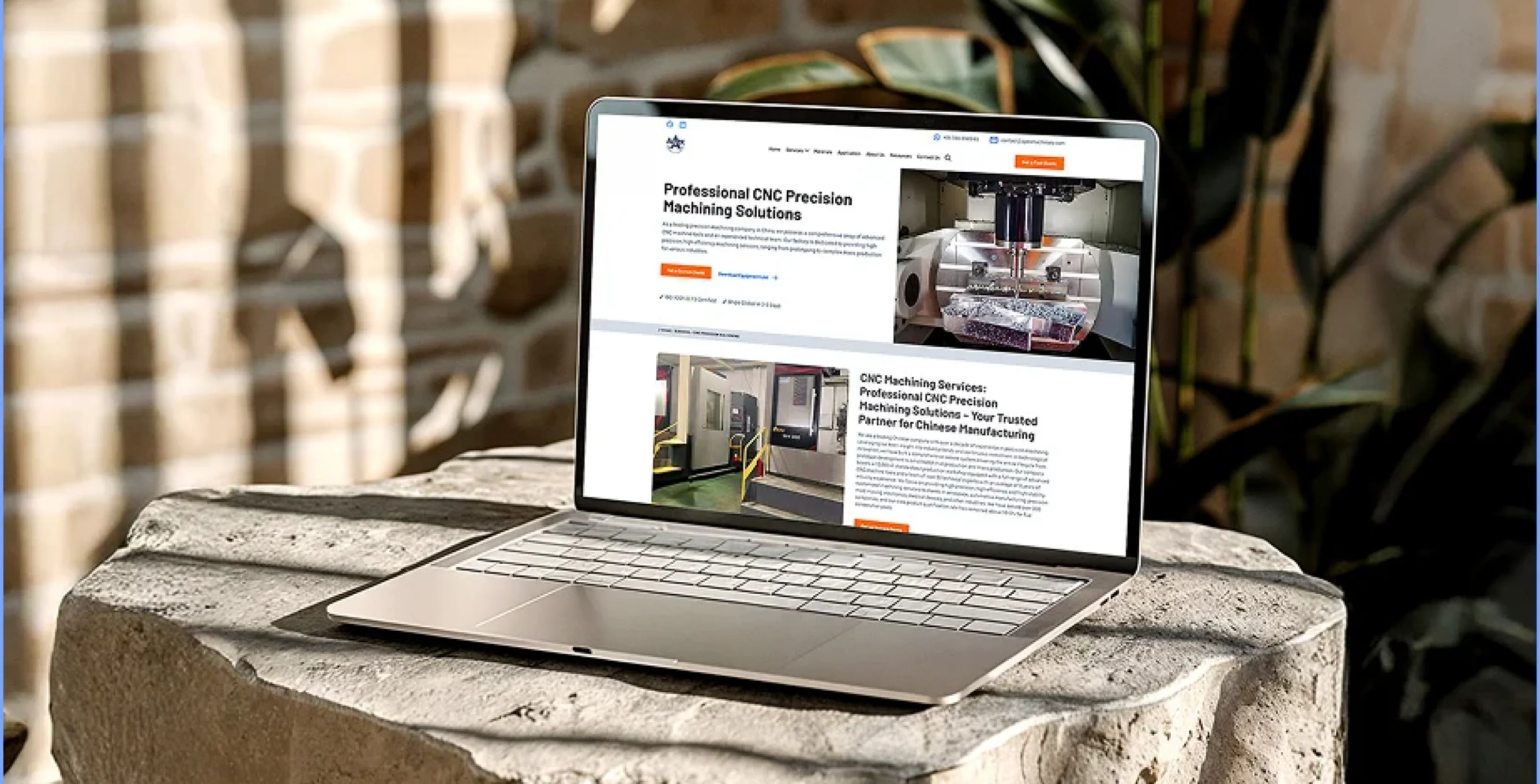
By focusing on a universal build, the resulting architecture is bloat-free, lightning-fast, and deeply structured. This is especially critical when targeting international manufacturing companies—such as those in China—who are looking to build better websites to reach global buyers. A universal, fast-loading infrastructure bypasses regional digital friction and establishes immediate authority.
Advanced Industrial SEO and AEO
The modern B2B buying journey begins with search engines and increasingly relies on generative AI answer platforms. If your technical specifications are locked in heavy files, AI query engines cannot index your data.
Through Answer Engine Optimization (AEO), technical machinery data is structured precisely so conversational AI tools can read and extract it. When an engineer asks an AI engine to find a “CNC machinery partner specializing in zero-friction RFQ processing,” AEO architecture ensures your facility is served as the definitive answer, securing inbound leads automatically.
Strategy Comparison Matrix
| Performance Metric | Legacy / Generalist Approach | The Pixerts Industrial Playbook |
| Primary Focus | Consumer-grade visual aesthetics | Technical specification & buyer trust |
| Inquiry Processing | Manual “Contact Us” forms & emails | Automated Zero-Friction RFQ engine |
| Technical Data | Hidden in heavy, unindexed PDFs | Interactive, clean digital catalogs |
| Development Build | Reliant on bloated single-platform constraints | Universal, platform-agnostic fast architecture |
| Search Readiness | Basic SEO | Advanced SEO & AI-ready AEO structuring |
| International Reach | High friction, slow load times globally | Optimized for global manufacturing procurement |
Conclusion: Securing the Machinery Niche
The World Cup is a temporary event, but the threat of workforce distraction and persistent employee shortages is permanent. By pairing internal physical automation with a world-class, automated digital UX framework, industrial machinery manufacturers can safeguard their pipelines.
Your website is more than a digital brochure; it is the frontline of your procurement operations. By engineering zero-friction RFQs, leveraging AEO, and building universally, you ensure that even when the world stops to watch a game, your business continues to capture international market share without interruption.
Frequently Asked Questions (FAQs)
Q: Why is B2B UX/UI design critical for industrial machinery?
A: Industrial buyers evaluate production partners based on raw numbers, tolerances, and capacities. Specialized B2B UX design focuses on technical clarity and data structuring, presenting complex machinery specifications in a way that enables fast, frictionless procurement decisions.
Q: How does AEO (Answer Engine Optimization) differ from standard SEO?
A: While SEO focuses on ranking links on search engine results pages, AEO focuses on structuring your technical data (like ISO certifications and machine specs) so that conversational AI tools can instantly read and cite your business as the definitive answer to complex engineering queries.
Q: Why is a universal web architecture important for machinery manufacturers?
A: A universal, platform-agnostic approach ensures the website’s underlying code is clean, incredibly fast, and easily indexable. While page builders are utilized when their specific functionality is needed, a universal foundation ensures the site performs flawlessly across all global markets and search platforms.
Q: How does a Zero-Friction RFQ combat employee shortages?
A: It automates the data collection phase of the quoting process. Instead of a sales engineer spending hours manually extracting requirements from emails, the buyer inputs exact material specs, CAD files, and tolerances into an intuitive interface, keeping the sales pipeline moving automatically.