
For many manufacturers, the website has become the first sales conversation. Before contacting a supplier, procurement managers, engineers, and purchasing teams often evaluate capabilities, certifications, equipment, case studies, and production capacity online.
As a result, your website is no longer just a digital brochure. It is a lead generation tool, credibility builder, and sales support asset. One of the most common questions manufacturers ask is:
“How much should a manufacturing website cost?”
The answer depends on several factors, including project scope, design requirements, content needs, integrations, and business goals.
In this guide, we’ll break down realistic pricing expectations and help you understand what drives manufacturing website costs.
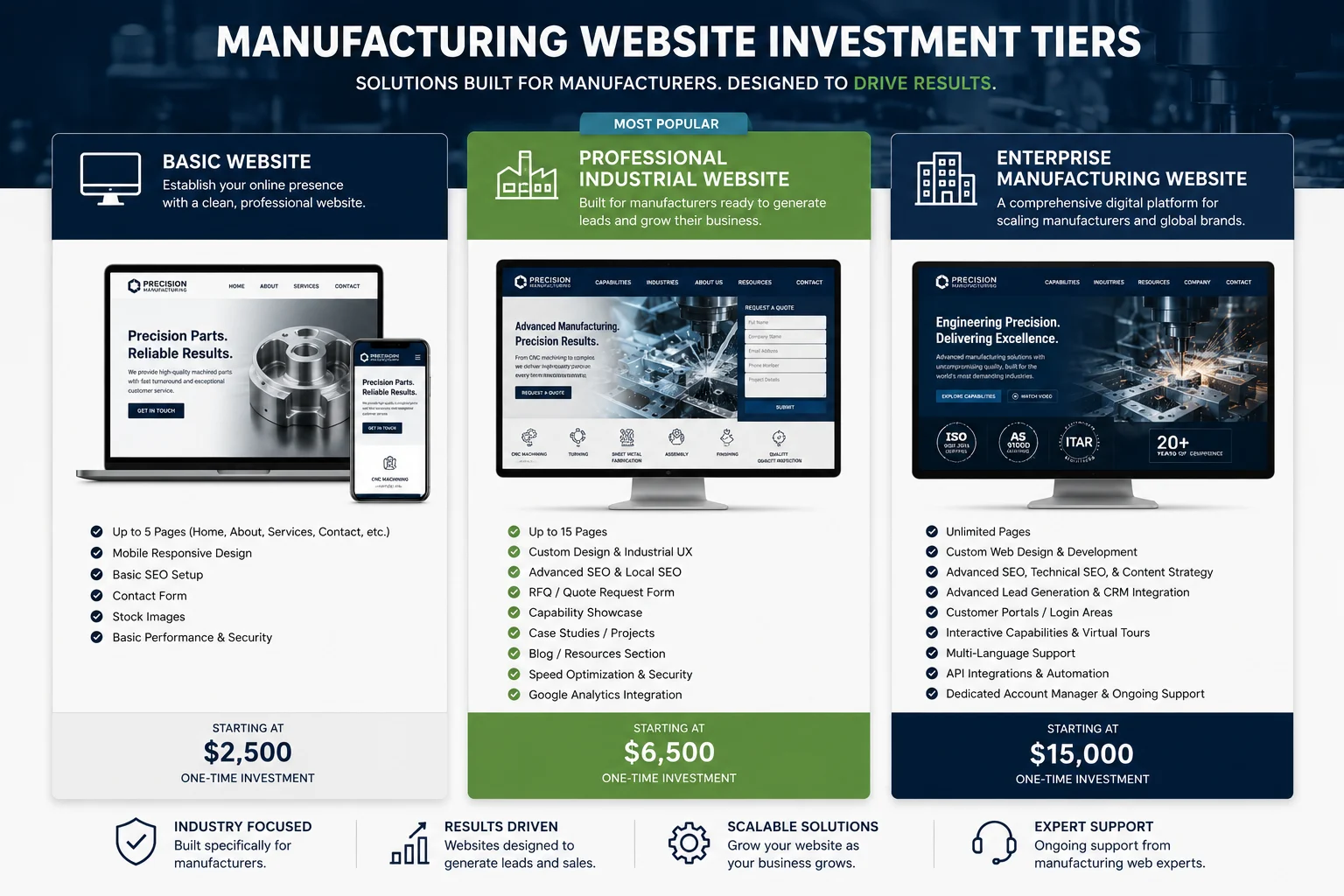
Typical Manufacturing Website Cost Ranges
Basic Manufacturing Website
$5,000 – $10,000
Typically includes:
- 5–10 pages
- Responsive design
- Basic contact form
- Company information
- Capability pages
- Standard CMS
Best for:
- Small machine shops
- Startups
- Local manufacturers
Professional Manufacturing Website
$10,000 – $25,000
Typically includes:
- 15–40 pages
- Custom UX design
- RFQ forms
- Industry-specific content structure
- SEO optimization
- Case studies
- Certification displays
- Lead tracking
Best for:
- Growing manufacturers
- Contract manufacturers
- Industrial suppliers
- CNC machining companies
Enterprise Manufacturing Website
$25,000 – $50,000+
Typically includes:
- Custom functionality
- ERP integrations
- Distributor portals
- Product databases
- Advanced lead routing
- Marketing automation
- Multi-location architecture
Best for:
- Large industrial companies
- OEMs
- Global manufacturers
Key Factors That Affect Manufacturing Website Costs
1. Number of Pages
The more pages required, the greater the design, content, and development effort.
Common pages include:
- Home
- About
- Capabilities
- Industries Served
- Equipment
- Certifications
- Case Studies
- Resources
- Contact
- RFQ
Many manufacturers underestimate how many pages are needed to properly communicate capabilities.
2. Custom Design vs Template
Template-based websites cost less initially.
However, custom-designed websites often perform better because they are built around:
- Buyer journeys
- Conversion goals
- Manufacturing workflows
- Trust-building elements
Custom UX design allows manufacturers to differentiate themselves from competitors using generic templates.
3. RFQ Functionality
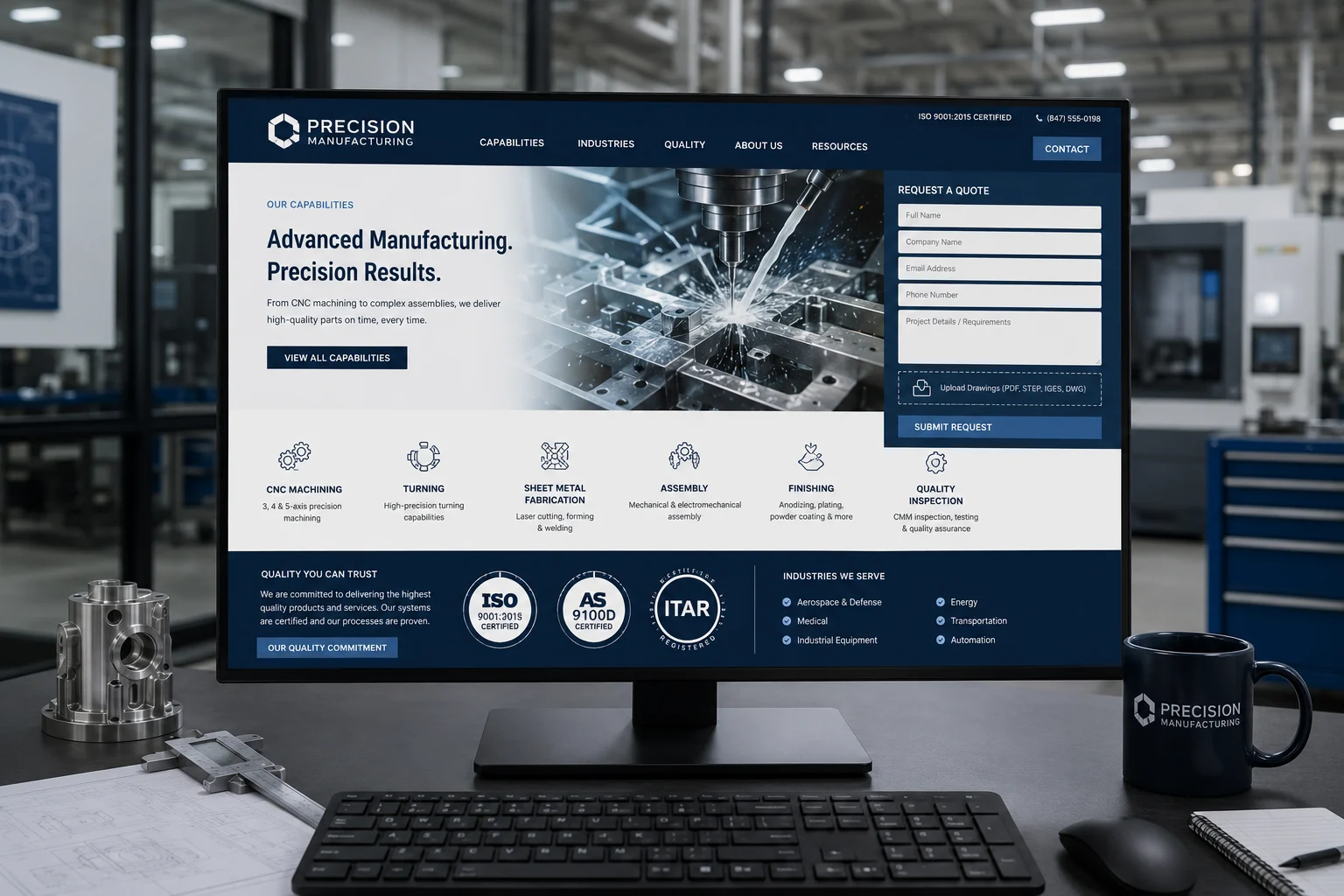
RFQ forms are among the most important lead-generation components of a manufacturing website.
Advanced RFQ systems may include:
- File uploads
- CAD drawing uploads
- Material specifications
- Quantity requirements
- Lead qualification workflows
More advanced functionality generally increases project costs.
4. Content Creation
Content is often one of the largest hidden expenses.
Manufacturers need:
- Capability descriptions
- Industry pages
- Equipment pages
- Case studies
- Process explanations
- Certification information
Without quality content, even the best-designed website may struggle to generate leads.
5. Search Engine Optimization
Many manufacturing websites are built without considering search visibility.
SEO-focused websites typically include:
- Keyword research
- Optimized architecture
- Metadata
- Internal linking
- Technical SEO
- Structured data
Investing in SEO during development is usually more cost-effective than retrofitting it later.
Why Cheap Manufacturing Websites Often Cost More
Some manufacturers choose low-cost website solutions, hoping to save money.
Common problems include:
- Poor user experience
- Weak search visibility
- Low conversion rates
- Generic messaging
- Outdated design
- Limited scalability
A website that fails to generate opportunities can become far more expensive than a properly planned investment.
What Procurement Managers Look For
Manufacturing buyers typically evaluate:
- Technical capabilities
- Certifications
- Quality standards
- Industry experience
- Equipment information
- Case studies
- Contact options
If this information is difficult to find, buyers may move on to competitors. A professionally designed website helps reduce uncertainty and increase trust.
Expected ROI From a Manufacturing Website
A manufacturing website should be viewed as a business asset rather than an expense.
Potential benefits include:
- More RFQ submissions
- Higher-quality leads
- Improved search visibility
- Stronger credibility
- Shorter sales cycles
- Better conversion rates
For many manufacturers, a single new customer can generate enough revenue to justify the entire website investment.
How to Budget for a Manufacturing Website
When planning a website budget, consider:
Immediate Needs
- Website redesign
- Better user experience
- Mobile optimization
Lead Generation Goals
- RFQ submissions
- SEO growth
- Conversion optimization
Long-Term Scalability
- Future content expansion
- New service pages
- Marketing campaigns
- AI search visibility
A scalable website often delivers greater long-term value than a low-cost solution.
Final Thoughts
Manufacturing website costs vary significantly depending on goals, functionality, and complexity. While basic websites may start around $5,000, most manufacturers seeking lead generation, SEO performance, and stronger buyer trust should expect to invest between $10,000 and $25,000.
The most important consideration is not the upfront cost but whether the website helps your business attract qualified opportunities, communicate capabilities, and support long-term growth.
FAQ Section
How much does a small manufacturing website cost?
Answer: Most small manufacturing websites cost between $5,000 and $10,000 depending on the number of pages, design requirements, and functionality.
Is a custom manufacturing website worth the investment?
Answer: Yes. Custom websites are often designed around buyer behavior, conversion goals, and lead generation strategies, helping manufacturers stand out from competitors.
How long does it take to build a manufacturing website?
Answer: Most manufacturing websites take between 6 and 16 weeks depending on project scope, content availability, and required functionality.