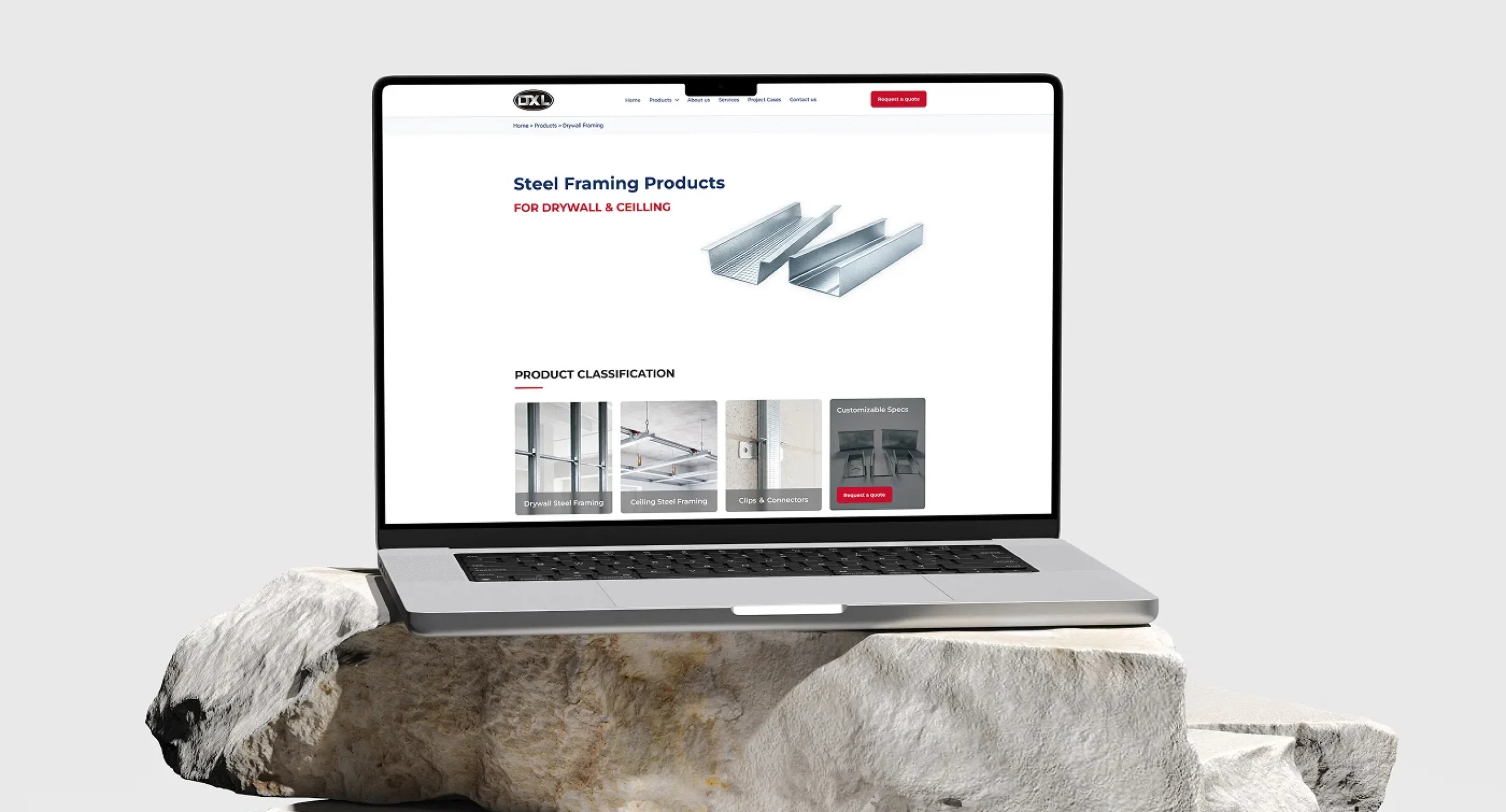
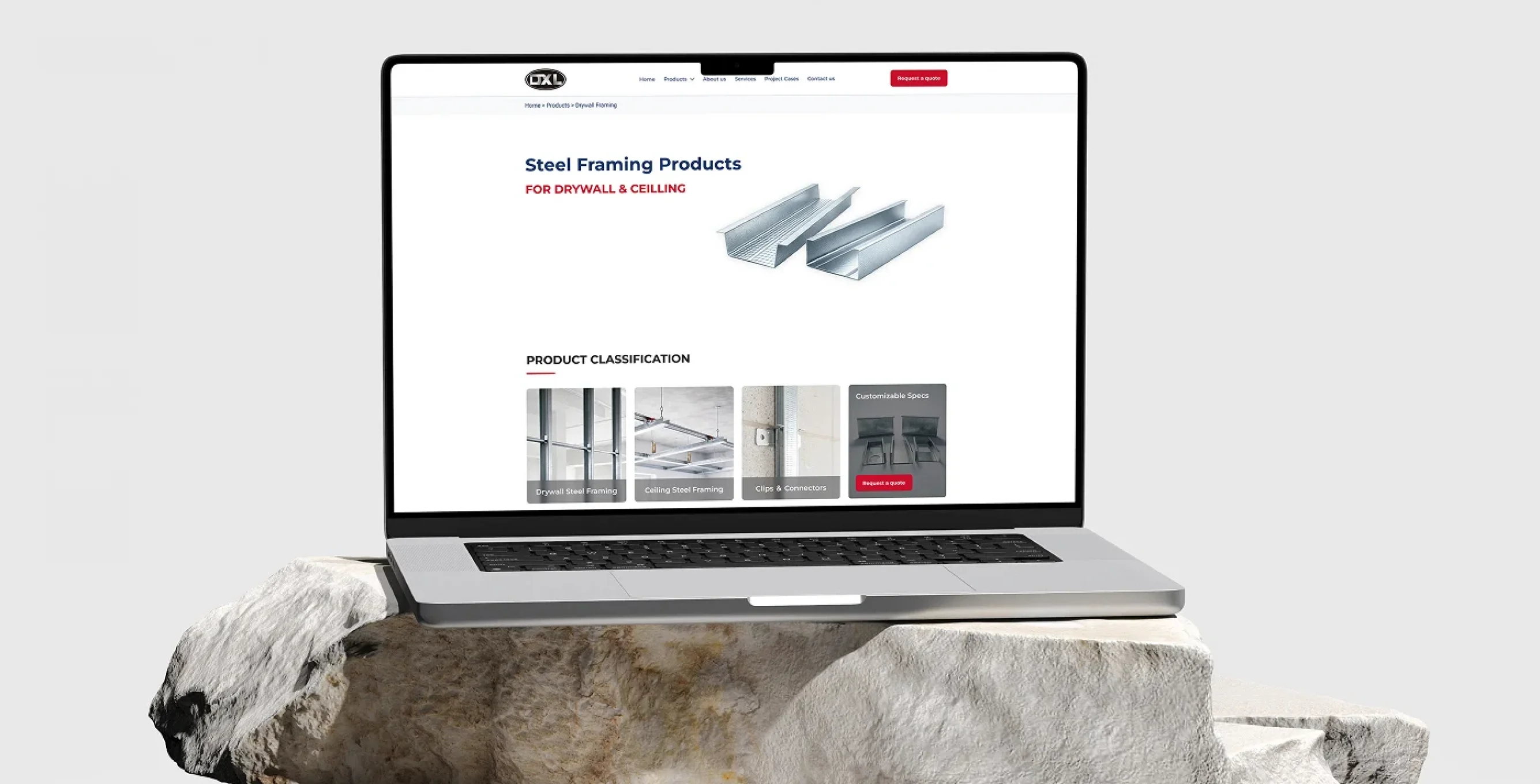
In the high-stakes world of B2B industrial manufacturing, a website is not a digital brochure; it is the digital twin of your shop floor. When a procurement officer for a Tier-1 aerospace contractor or a medical device OEM begins their vendor research, they are not looking for marketing jargon. They are looking for a Technical Source of Truth. They need to know, definitively and immediately, whether your facility has the spindle speed, rigid tooling, and thermal control required to machine complex geometries from Inconel 718 or Medical-Grade PEEK.
Unfortunately, the vast majority of CNC machine shops rely on generic web design. They hide their most valuable technical data—their specialized alloy capabilities—behind poorly structured PDFs or vague, bulleted lists. This creates “Information Friction.” When an engineer cannot instantly verify that you handle exotic superalloys or high-performance engineering plastics, they will bounce to a competitor whose website functions as an accessible, data-dense technical catalog.
To dominate the digital landscape in 2026, CNC web design must prioritize material visibility. By engineering a platform that seamlessly integrates Answer Engine Optimization (AEO), clean-code architecture, and a “Precision-First” UX/UI, you can transform your website into an automated procurement engine that captures high-ticket manufacturing contracts.
The Psychology of the Technical B2B Buyer
To build a high-converting CNC website, you must first understand the psychology of your user. You are not selling to casual consumers; you are selling to mechanical engineers, procurement officers, and quality assurance (QA) managers. These users are highly educated, deeply analytical, and exceptionally pressed for time.
The Burden of Validation
When an engineer is tasked with sourcing a vendor for a titanium impeller or a high-tolerance medical implant, their primary goal is to mitigate risk. They are asking specific, technical questions:
- Can this shop handle the work-hardening properties of 304 Stainless Steel?
- Do they have the 5-axis capabilities required to avoid multiple setups on this complex geometry?
- Are they certified to machine aerospace-grade Aluminum 7075?
Generic web design treats all materials equally. A standard template might list “Aluminum, Steel, and Plastics” in a single paragraph. To the technical buyer, this signals a lack of specialization. It screams “General Job Shop.”
The Need for Speed and Structure
Engineers evaluate the precision of your hardware based on the precision of your digital infrastructure. If your website features misaligned tables, broken links, or incredibly slow load times due to unoptimized 3D renders, the subconscious assumption is that your quality control and machining tolerances are equally sloppy.
By using a strict mathematical layout—such as an 8px grid system—you provide a subconscious “digital handshake” that signals your brand values accuracy. When complex material data is organized logically, the user can self-qualify. By the time they reach your RFQ form, they are no longer wondering if you can do the job; they are simply submitting their CAD files for pricing.
The Failure of Generic Web Design for Exotic Materials
The fundamental flaw in traditional web design for the manufacturing sector is that it is often executed by consumer-focused agencies. A generalist agency does not understand the difference between a Fiber Laser and a CO2 Laser, nor do they understand why the machinability rating of an alloy is critical to your profit margins.
The PDF Trap
One of the most common mistakes in CNC web design is burying material specifications inside downloadable PDFs. Generalist agencies often upload a shop’s physical brochure directly to the site.
- The UX Failure: Users on mobile devices—often walking a shop floor or in a quick meeting—do not want to download, pinch, and zoom on a 15-page PDF just to find out if your machine is Hastelloy.
- The SEO/AEO Failure: Search engines and AI Answer Engines struggle to efficiently index data trapped in PDFs. If your entire exotic material list is in a document rather than structured HTML, Gemini and Google will not recommend your shop when a buyer asks, “Find me a CNC shop that machines Titanium Grade 5 near me.”
Vague Material Categorization
Another massive failure is vague grouping. Stating “We machine all metals” is a missed opportunity for lead generation. B2B search intent is highly specific. Buyers do not search for “metal machining”; they search for “Precision turning of 17-4 PH Stainless Steel.” If your website does not explicitly highlight these specific alloys in structured H2 and H3 tags, you are forfeiting Tier-1 traffic to competitors who do.
Structuring the Material Selection Matrix (UX/UI)
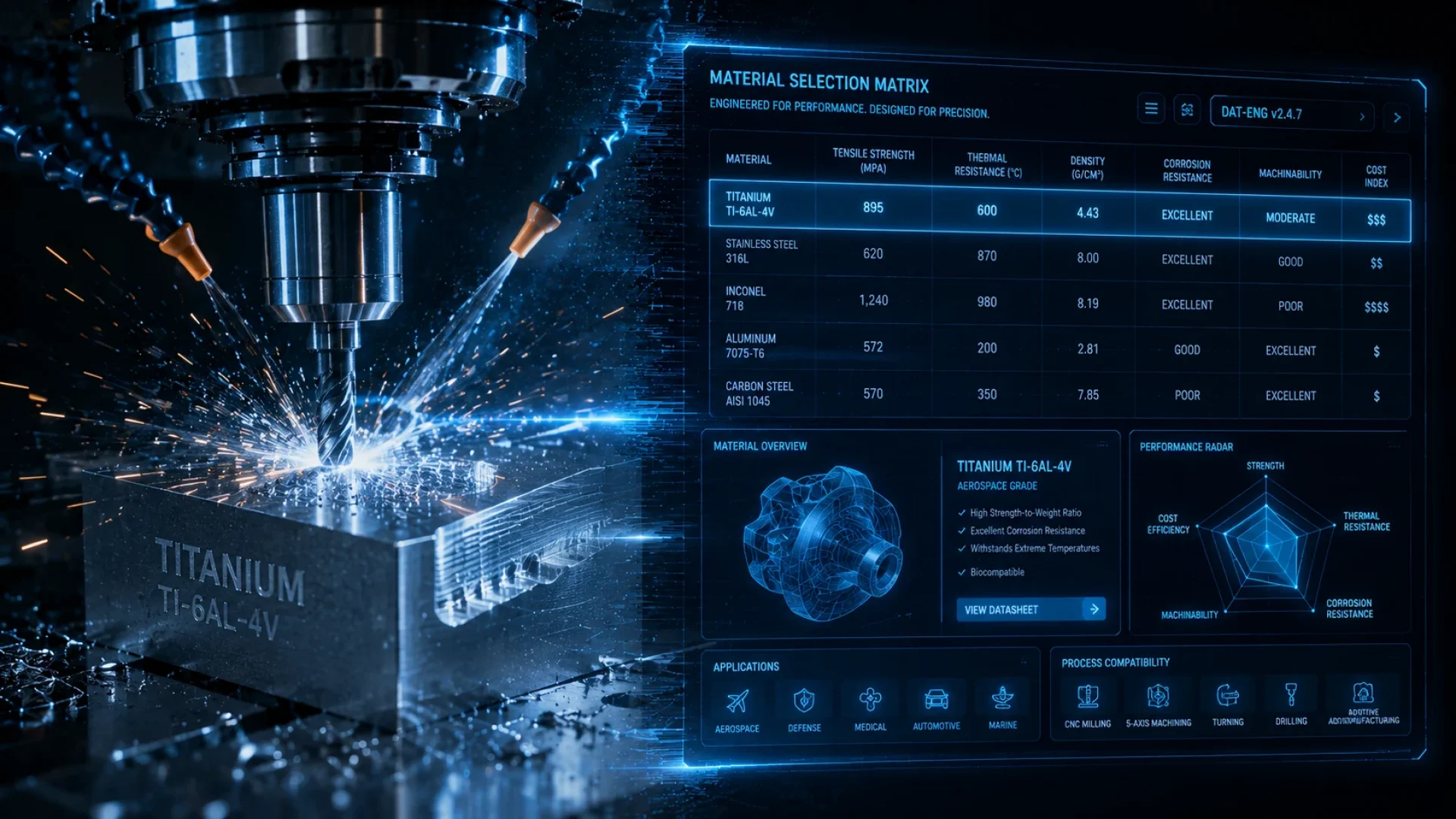
To eliminate Information Friction, your CNC web design must feature a dedicated, highly structured Material Selection Matrix. This is not just a page; it is an interactive hub designed to enable buyer self-service.
The Open Layout Architecture
Abandon the traditional, cluttered product grids. For specialized materials, utilize an open-layout architecture that gives technical data room to breathe.
- Left Column (Visual): High-resolution, macro-photography of the material (raw stock) and a finished, high-tolerance part machined from that specific alloy. Showing the “kerf” or the surface finish proves capability.
- Middle Column (Technical Data): Interactive, searchable tables. Allow the user to toggle between mechanical properties (Tensile Strength, Yield Strength, Hardness) and thermal properties.
- Right Column (Application & Action): A fixed specification card detailing the ideal industries for the material (e.g., Aerospace, Medical) paired with a persistent “Request a Quote” button.
Advanced Filtering Capabilities
If your shop machines 50+ different materials, the user must be able to filter them instantly. Implement dynamic filters based on engineering requirements:
- By Metal Family: Aluminum, Stainless Steel, Carbon Steel, Titanium, Superalloys, Copper/Brass.
- By Engineering Plastic: PEEK, Ultem, POM (Delrin), PTFE (Teflon), Polycarbonate.
- By Property: “High Heat Resistance,” “Corrosion Resistant,” “Medical Grade (Biocompatible).”
When an engineer can click “High Heat Resistance” and instantly see your capabilities for Inconel and Hastelloy, you have proven your technical authority.
Deep Dive: Designing Pages for Specific Superalloys and Plastics
Different materials require different digital narratives. How you present Aluminum 6061 should be fundamentally different from how you present Medical-Grade PEEK.
Highlighting Titanium (Ti-6Al-4V)
Titanium is the gold standard for aerospace and biomedical applications due to its high strength-to-weight ratio and corrosion resistance. However, it is notoriously difficult to machine due to poor heat conductivity, which can lead to tool wear and galling.
The Digital Strategy: Your Titanium page must address these machining challenges head-on. Don’t just say you cut it; explain how you cut it. Highlight your use of high-pressure coolant systems, rigid workholding, and specialized carbide tooling.
Visuals: Feature high-magnification images of medical implants or aerospace brackets, explicitly pointing out the flawless surface finishes achieved despite the material’s difficulty.
Compliance: Clearly link your Titanium machining services to your AS9100 (Aerospace) or ISO 13485 (Medical) certifications.
Highlighting Superalloys (Inconel, Hastelloy, Monel)
Superalloys retain their strength at extreme temperatures, making them essential for jet engines and nuclear reactors. They are prone to rapid work-hardening during machining.
- The Digital Strategy: Focus on “Process Control.” A buyer looking for Inconel machining wants to know you aren’t going to scrap $10,000 worth of raw material.
- Data Density: Include tables detailing the specific grades you handle (e.g., Inconel 718 vs. 625). Discuss your spindle torque capabilities and low-speed, high-feed machining strategies.
- AEO Triggers: Use phrases like “Inconel 718 contract manufacturing” and “Extreme temperature alloy machining” to capture niche Answer Engine queries.
Highlighting High-Performance Plastics (PEEK, Ultem)
Engineering plastics are replacing metals in many high-tech applications, but they require extreme precision to avoid melting, chipping, or internal stress fracturing during the CNC process.
The Digital Strategy: Create comparison guides. A highly effective UX strategy is offering a side-by-side technical comparison of “PEEK vs. Ultem (PEI).” Explain that PEEK offers superior wear resistance, while Ultem provides extreme dielectric strength.
Educational Authority: By educating the buyer on the subtle differences between these expensive plastics, you elevate your brand from a mere “vendor” to a trusted “manufacturing consultant.”
Answer Engine Optimization (AEO) for CNC Materials
In 2026, traditional SEO is no longer sufficient. Procurement officers are increasingly relying on AI agents like Gemini and Perplexity to source vendors. They input prompts like: “Find me an ISO-certified CNC shop on the East Coast that specializes in 5-axis milling for Hastelloy and Inconel.”
If your web design does not account for Answer Engine Optimization (AEO), you will be invisible to these AI gatekeepers.
The Power of Semantic Schema
AI agents do not “read” your website as humans do; they parse structured data. To dominate AEO, you must translate your specialized alloy capabilities into machine-readable JSON-LD Schema.
When you list “Titanium Gr5 (TC4)” on your site, it should be wrapped in a Semantic Schema that defines it as a specific Service or Product entity, linked directly to your Organization and its areaServed. This explicit data structuring is what tells the AI, “Yes, this company definitely machines this exact alloy.”
Building Entities Not Just Keywords
Traditional SEO involved stuffing the keyword “CNC Aluminum” onto a page. AEO requires building an “Entity.” This means your page on Aluminum must comprehensively cover the topic:
- What are the specific grades? (6061, 7075, 5052)
- What are the primary applications? (Aerospace fixtures, automotive housings)
- What are the compatible secondary processes? (Type II vs. Type III Anodizing, Bead Blasting)
By providing the most comprehensive, structured answer on the internet regarding that specific material, the AI algorithm has no choice but to cite your facility as the primary authority.
Engineering the Zero Friction RFQ for Material Selection
The ultimate goal of highlighting specialized alloys on your CNC website is to drive high-value Manufacturing Request for Quotes (RFQs). However, if your contact form is a generic “Name, Email, Message” block, you are creating massive friction for the buyer and a headache for your sales team.
The Dynamic B2B Procurement Portal
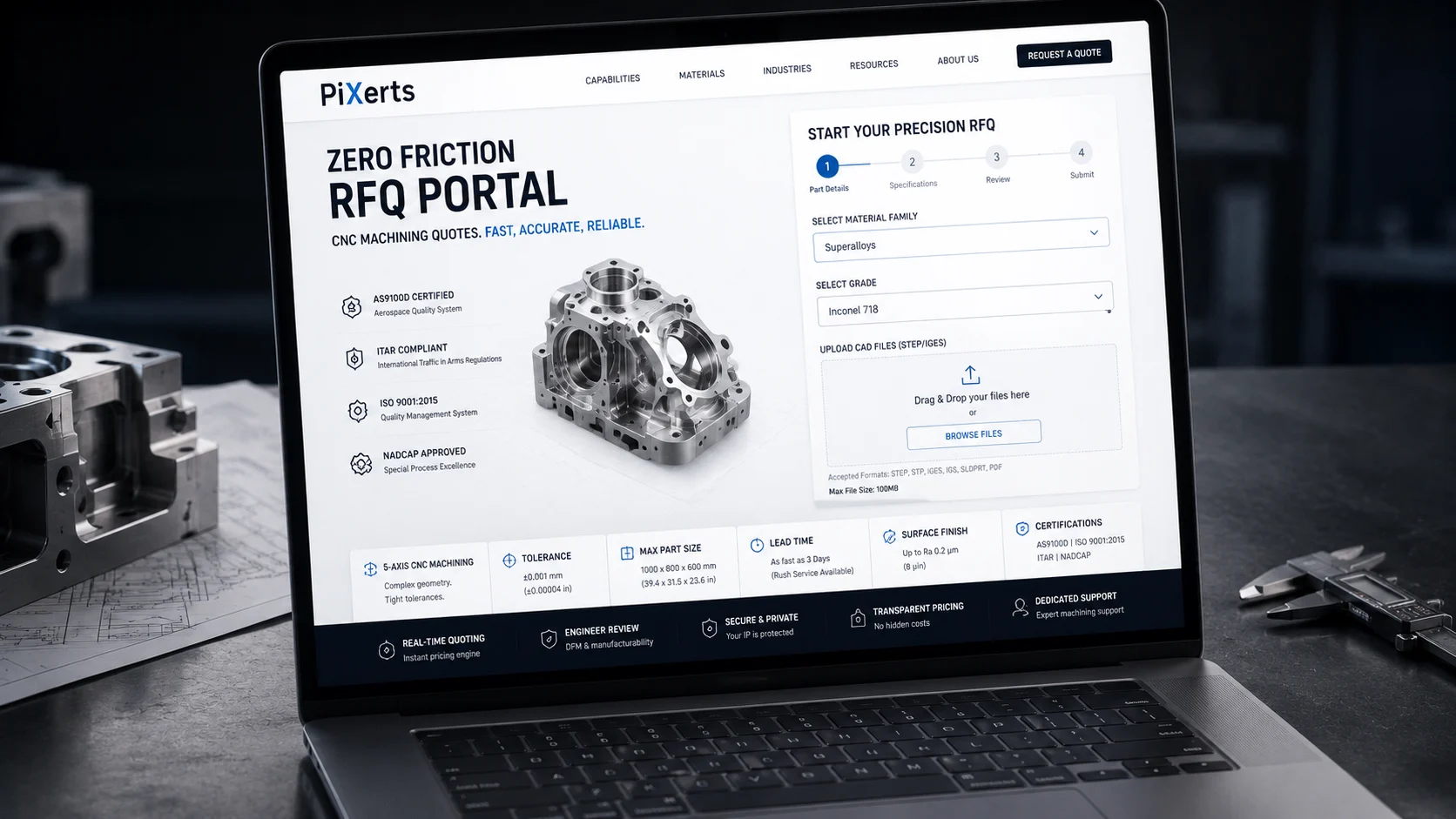
Your RFQ process must be a specialized, automated procurement engine.
- Native CAD Uploads: Procurement officers must be able to securely drag and drop their 3D CAD files (STEP, IGES, SLDPRT) directly into the browser.
- Material Dropdowns: Do not make the user type out their material. Provide a dynamic dropdown menu categorized by material family. If they select “Stainless Steel,” a secondary logic dropdown should appear offering “304, 316L, 17-4 PH.”
- Tolerance and Finishing Selectors: Allow them to check boxes for required tolerances (e.g., +/- 0.001″) and secondary finishes (e.g., Electropolishing, Passivation).
The Internal ROI of the Zero Friction RFQ
A highly technical RFQ form doesn’t just help the user; it protects your internal margins. When your sales engineers receive an inquiry that already includes the CAD file, the exact alloy (down to the grade), and the required compliance standard, they can generate an accurate quote in minutes rather than spending days going back and forth via email asking clarifying questions. This significantly lowers your Customer Acquisition Cost (CAC) and accelerates pipeline velocity.
Technical Content Strategy: Whitepapers and Data Sheets
To cement your authority as the definitive “Source of Truth” for specialized CNC materials, your web design must accommodate a robust, ongoing content strategy.
The Shift from Blogging to Technical Insights
B2B industrial buyers do not read generic marketing blogs. They read data sheets, whitepapers, and tolerance guides. Your website should feature an “Insights” or “Resources” hub that focuses on solving complex engineering problems.
- Material Deep Dives: Publish long-form guides such as “The Definitive Guide to Machining Inconel for Aerospace Applications.”
- Design for Manufacturability (DFM) Guides: Offer content that helps engineers design better parts. For example, “How to Adjust Wall Thickness When Designing for Brittle Plastics like PMMA.”
- Gating Strategy: Offer high-value, highly technical tolerance charts as gated content (requiring an email address). This transforms anonymous traffic from research engineers into a highly qualified email list for future marketing.
Future Trends in Material Display: Visualizing Precision
As we move deeper into 2026, the way CNC shops display materials will continue to evolve.
3D Visualization and Digital Twins
We are moving beyond static images. The next iteration of high-performance CNC web design involves integrating lightweight, browser-based 3D models (using technologies like WebGL). Imagine a buyer landing on your “Complex Geometries” page and being able to click, drag, and rotate a 3D render of a 5-axis-machined titanium turbine blade, zooming in to view the simulated surface finish.
API Integration with Real-Time Inventory
For shops that supply their own raw materials or operate in high-volume contract manufacturing, integrating your website with your backend ERP system is becoming essential. Displaying real-time inventory of exotic alloys or current lead times based on machine capacity provides ultimate transparency for the buyer, enabling split-second procurement decisions.
Conclusion
Your CNC machinery is only as profitable as the contracts it secures. If you operate million-dollar 5-axis milling centers capable of cutting the toughest superalloys on the planet, but your website looks like a generic 2015 template, you are losing high-ticket RFQs to shops with inferior hardware but superior digital infrastructure.
By engineering a B2B web design that meticulously highlights specialized alloys, utilizes AEO Semantic Schema, and delivers a Zero Friction RFQ experience, you transcend the label of a “vendor.” You establish your brand as an industrial authority, ensuring that when the world’s top engineers need absolute precision, your facility is the only logical choice.
Frequently Asked Questions
1. Why is it important to list specific material grades (like Aluminum 6061 vs. 7075) on my website?
Answer: Detailing specific grades signals deep technical expertise to procurement officers and engineers. Aluminum 6061 is excellent for general machinability, while 7075 offers superior strength for aerospace applications. Highlighting these differences proves you understand the nuances of material science, immediately building trust with Tier-1 buyers.
2. How does AEO (Answer Engine Optimization) help my CNC shop rank for exotic materials?
Answer: AI agents like Gemini look for structured “Entities” rather than just keywords. By tagging your specialized alloys (like Inconel or Medical PEEK) with Semantic Schema, you format your capabilities into machine-readable data. This ensures your shop is cited as the definitive answer when buyers ask AI for specialized machining solutions.
3. What is the biggest mistake CNC shops make when displaying materials online?
Answer: The most common mistake is burying material capabilities inside downloadable PDFs or using generic phrases like “We machine all metals.” This creates “Information Friction.” Technical buyers expect data-dense, instantly searchable HTML tables that allow them to verify your capabilities without leaving the page.
4. How should a CNC website handle the RFQ process for specialized alloys?
Answer: Your website requires a “Zero Friction RFQ” portal. Instead of a generic contact form, provide dynamic dropdowns where engineers can select the exact material family and grade, specify required tolerances, and securely upload native 3D CAD files (STEP/IGES) directly in the browser.
5. How can UI/UX design prove the precision of our machine shop?
Answer: Engineers equate digital precision with physical precision. We utilize a strict mathematical 8px-grid system to ensure perfect alignment of all technical tables, matrices, and imagery. A fast, uncluttered, and mathematically perfect interface subconsciously signals that your shop floor operates with the exact same level of rigorous quality control.
6. Can highlighting specialized materials improve the quality of my leads?
Answer: Absolutely. By focusing your web design and content on complex, difficult-to-machine superalloys or engineering plastics, you naturally filter out low-value “hobbyist” traffic. You attract serious B2B buyers looking for high-tolerance contract manufacturing, significantly increasing the average value of your inbound RFQs.